

What the Finishing Phase Actually Costs You
- Describe the three growth phases and what the pig is building in each
- Explain why feed dominates the cost of producing a pig
- Set a realistic target age and weight for your own system
From weaning to slaughter, a pig eats far more than it ate in its whole life before that point. This is the phase that decides whether your farm makes money. Everything else - housing, breeding, medicine - matters, but feed is typically 60 to 70 percent of the total cost of producing a pig. If you get the finishing phase wrong, no amount of good breeding will rescue the margin.
The three phases
We split the period after weaning into three practical stages. The boundaries are not laws, they are working guides.
- Weaner (about 6 to 25 kg) - a fragile gut adjusting from milk to solid feed. The pig needs the most expensive feed it will ever eat, but in small quantities. Skimping here costs you weeks later.
- Grower (about 25 to 60 kg) - the pig is laying down muscle fast and converting feed efficiently. This is the best value phase in the whole cycle.
- Finisher (about 60 kg to market) - growth continues but the pig starts putting on proportionally more fat, eats more per day, and converts feed less efficiently.
Why efficiency falls as the pig grows
A young pig turns feed into lean meat. An older, heavier pig maintains a bigger body before it grows anything at all, and the tissue it adds contains more fat. Fat costs more feed energy per kilogram than lean meat does. So every extra week of finishing is more expensive than the week before it. That single fact drives the selling decision you will learn in Lesson 6.
Realistic targets
Market weight in most East and Southern African markets is commonly 85 to 100 kg live. A well managed herd on a balanced ration can reach that in roughly 5 to 6 months of age. On poor or irregular feeding, the same genetics take 8, 10 or even 12 months - and every one of those extra months is feed, labour and risk with no extra sale price at the end.
Be honest about which system you are actually running. If your pigs are reaching 90 kg at 9 months, do not write a business plan based on 5 months. Write the plan on your real numbers, then work on closing the gap.
Where the weeks disappear
Late pigs are almost never a mystery. In smallholder herds the usual causes, in rough order of frequency, are:
- Feed that is low in energy or protein, or that changes every time the maize price moves.
- Feed that runs out for a day or two at a time, so the pig repeatedly loses and regains condition.
- Worms and mange quietly taking a share of everything you feed.
- Not enough clean water, which directly cuts feed intake.
- Overcrowding, heat stress and pens that are wet or muddy.
Notice that only one of those is about buying better feed. Three of the five are about consistency and management, and cost little or nothing to fix.
Think in cost per kilogram of gain
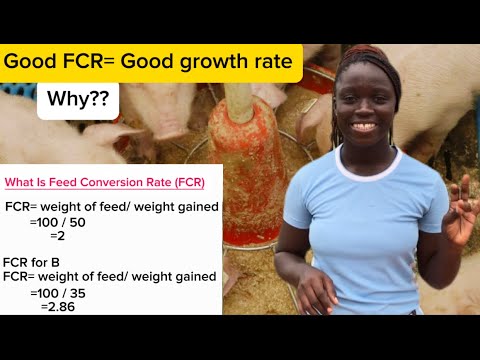
Stop thinking about the price of a bag of feed. Start thinking about what it costs you to put one kilogram onto a pig. A cheaper bag that gives poor gain can easily be the more expensive feed. You cannot see that from the bag price; you can only see it from weight and feed records. The next two lessons give you both tools.