rise AFRICA skills
Dairy Production / Module 1 of 12

Module 1

🥛 The Business of Smallholder Dairy

A dairy cow is one of the few things on a smallholding that pays you money every few days instead of once a season. This module covers what that cash flow is really worth, the one number that decides whether a cow pays or loses, what a large Kenyan study actually measured about which management practices raise milk yield, and how to build an honest income and cost picture for your own animals. Every price in the reference material for this course is unverified, so this module teaches a costing method and sends you out to price your own market this week.

What you will be able to do after this module

  • Explain why daily cash flow is the real commercial advantage of smallholder dairy
  • Define calving interval and calculate it from two calving dates
  • Rank the management practices measured to raise smallholder milk yield
  • Break milk income into its three multiplying components
  • List the six cost categories of a smallholder dairy business
  • Build the minimum record set a smallholder dairy business needs
Lesson 1.1~11 min

Why Milk Pays Every Day

In this lesson
  • Explain why daily cash flow is the real commercial advantage of smallholder dairy
  • Describe what a typical African smallholder dairy herd actually looks like
  • Identify the two ways a smallholder can grow milk income without buying animals

Almost everything else you can grow on a small piece of land pays you once. You plant, you wait, you weed, you harvest, and one day money arrives. Then you wait a year. A dairy cow is different. She pays out daily, or every few days, all the way through her lactation. You milk her in the morning, and the milk is sold that morning at the farm gate or delivered to a cooperative. That steady drip of cash is the honest commercial reason smallholder dairy has spread across East Africa, and it matters far more to a small business than the headline litres figure does.

Think about what daily cash actually buys you. School fees paid in instalments instead of one impossible lump. Salt, soap and paraffin bought without borrowing. Money to buy feed for the cow herself, out of the cow's own earnings, which is the difference between a cow that is fed and one that is not. A business with daily income can survive shocks that kill a business with annual income, because it never has to wait six months for the next money.

Now look honestly at the scale of the thing. A large panel study followed 1,317 cow-owning households in Asembo, Siaya County, western Kenya, from 2013 to 2016, giving 3,682 household-round observations. The average herd size in that sample was 1.9 cows per household. That is the real picture of African smallholder dairy: one cow, or two. Not a herd. Not a dairy farm as a magazine would show it. One or two animals standing behind a house, being fed by hand.

That single fact should change how you think about growing this business. If you have two cows and no money to buy a third, then every strategy that begins with "buy more animals" is closed to you. What is left is not small. It is this:

  1. Get more days of the year in which your cow is actually in milk.
  2. Get more milk on each of the days she is in milk.

Those two levers are the whole of this course. Everything about reproduction, everything about the lactation curve, everything about feeding and calf rearing is really about pushing one of those two numbers up on the animals you already own.

The same Kenyan study also measured what milk does for the household, not just for the cash box. A calving event in the household raised household caloric intake by 11 to 12 percent, and animal-source carbohydrate intake by 36 percent. That is food going into children, measured, not claimed. Adding a calving cow raised household milk yield by 12 to 17 percent. Read those numbers as what they are: measurements from one district in western Kenya over four years, not a promise for every farm. But they show that the value of a dairy cow to a household is partly cash and partly food, and a costing that counts only the litres sold misses part of what she is doing.

Be equally honest about the other side. A dairy cow is a demanding animal. She must be fed every day whether or not she is milking, she must be watered generously, she must be bred back on time, and she can be killed by a disease or an untreated case of milk fever in a day. Milk itself spoils within hours in a hot climate. None of that makes dairying a bad business. It makes it a business that rewards management rather than luck, which is exactly why a course like this can change your income.

So begin with the right question. Not "how many cows should I buy?" but "how many days a year is my cow earning, and how much is she earning on those days?" The rest of this module builds the arithmetic to answer that.

Average smallholder herd size
1.9 cows per household
Measured in 1,317 cow-owning households in Asembo, Siaya County, Kenya, 2013 to 2016. It is a real picture of the system, not a target
Milk yield effect of a calving cow
12 to 17 percent higher household milk yield
From the same Kenyan panel study. It is an association measured in that district over those years, not a guaranteed result on your farm
Household calorie effect of a calving
11 to 12 percent higher caloric intake
Animal-source carbohydrate intake rose 36 percent in the same study. Part of a cow's value is food eaten at home, not cash sold
Study size
1,317 households, 3,682 observations
A large, peer-reviewed African dataset, which is why this course leans on it. It is still one county in one country over four years
Do this today: write down, for each cow you own, whether she is in milk right now, and if she is dry, the date she went dry. If you cannot answer, that is your first finding, and start a notebook page for each animal today.

Recommended viewing

These are free videos made by other people, not by rise AFRICA skills. Each one was checked against YouTube and is on topic. The written lessons are the course. Treat these as useful extra watching.
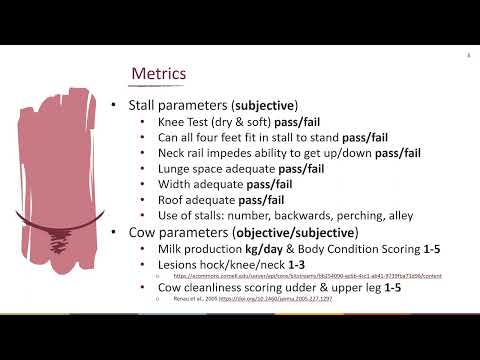
Metrics for Smallholder Dairy Cow Welfare in Kenya

Livestock Data for Decisions LD4D

Dairy Farming In Kenya: All you need to know on How to choose what to feed your Dairy Cows.

dairy networks

How I Make KSH 63,500 per month from milking my three dairy cows (learn from John's success story)

Shamba Tours

Lesson 1.2~11 min

The 670-Day Problem

In this lesson
  • Define calving interval and calculate it from two calving dates
  • Explain how a long calving interval compounds into lost lifetime output
  • Compare a measured smallholder calving interval against the biological target

There is one number in dairy that decides more of your income than any other, and most smallholders have never written it down. It is the calving interval: the number of days between one calving and the next.

Here is why it rules everything. A cow only gives milk after she has calved. When that lactation ends she is dry, eating and costing you money and returning nothing, until she calves again and a new lactation starts. So the number of lactations she delivers in her life is set by how often she calves. If she calves often, you get many lactations and many calves out of the same animal, the same shed, the same daily labour. If she calves rarely, you are feeding a cow for months while she earns nothing.

Now the sourced numbers. In that same Asembo, Siaya panel study of 1,317 Kenyan households, the average calving interval was 670 days. The widely used biological target for a well-managed dairy cow is roughly 365 to 425 days. So the measured smallholder reality was nearly double the target, and the gap is not small, it is the whole business.

Work out what that gap costs, in animals rather than money. Take a cow with a six-year productive life.

  1. Cow A calves every 365 days. Six years is about 2,190 days. Divide by 365 and she delivers about six calvings and six lactations.
  2. Cow B calves every 670 days. Divide 2,190 by 670 and she delivers about 3.3 calvings and 3.3 lactations.
  3. Hold the milk per lactation and the value of each calf the same for both cows. Cow B produces on the order of 45 percent less lifetime output than Cow A.

And she does it while eating the same feed for the same six years, occupying the same shed, taking the same daily labour. That is the compounding loss. It is not one missed calf. It is nearly half of everything that animal could have given you, gone, quietly, without any single dramatic disaster you could point to.

This is also why the number is so easy to ignore. A cow with a 670-day interval never looks sick. Nothing goes visibly wrong on any particular day. The loss shows up only when you write two calving dates down and subtract.

The same study gives two more clues about what moves this number. Households with access to communal grazing had calving intervals up to 428 days shorter than those without. Read that carefully. Access to grazing, which is really access to feed, was associated with an enormous shortening of the interval. That tells you the problem is not mainly genetic. It is nutrition and management. The study also modelled that an additional cow in the household was associated with a calving interval about 257 days shorter, which should be read as a correlation from that model, not as a recipe to go and buy a cow.

So what is the target you are aiming at? A cow carries her calf for about 283 days. Add the waiting period after calving before she is bred again, roughly 60 to 85 days if her cycles resume promptly and she conceives, and 283 plus about 80 gives 365 to 425 days. That is where the target comes from. It is arithmetic, not opinion, and the next module takes it apart step by step.

One warning about comparing figures. An improved Boran herd in Kenya has been recorded at a calving interval of 13.8 months, about 420 days. That is a real figure, but it comes from well-managed ranch and research-station conditions, not from a zero-grazing unit behind a house. Do not read it as proof that your breed will do the same on your feeding. Breeds differ, but management differs more.

Everything else in this course, heat detection, feeding in early lactation, body condition, calf rearing, exists partly to pull your own calving interval down toward that 365 to 425 day band. Start by finding out what it actually is.

Measured smallholder calving interval
670 days average
From the Asembo, Siaya study of 1,317 Kenyan households. It is a measured average for that system, not a fixed feature of African cattle
Biological target calving interval
about 365 to 425 days
Derived from 283 days of gestation plus roughly 60 to 85 days before conceiving again. It is a target for a well-managed cow, not a guarantee
Lifetime output loss at 670 days
on the order of 45 percent less
Derived arithmetic: about 6 calvings over six years at 365 days against about 3.3 at 670 days, holding milk per lactation and calf value equal
Effect of communal grazing access
calving interval up to 428 days shorter
An association measured in the same Kenyan study. It shows how strongly feed and management, not just genetics, drive this number
Do this today: for each cow, write her last two calving dates on a page and subtract one from the other. That number of days is her calving interval, and it is the single most important figure in your business.

Recommended viewing

These are free videos made by other people, not by rise AFRICA skills. Each one was checked against YouTube and is on topic. The written lessons are the course. Treat these as useful extra watching.

Metrics for Smallholder Dairy Cow Welfare in Kenya

Livestock Data for Decisions LD4D

How I Make KSH 63,500 per month from milking my three dairy cows (learn from John's success story)

Shamba Tours

Dairy Farming In Kenya: All you need to know on How to choose what to feed your Dairy Cows.

dairy networks

Lesson 1.3~12 min

What Actually Raised Yield in Siaya

In this lesson
  • Rank the management practices measured to raise smallholder milk yield
  • Interpret an association from a survey without treating it as proof
  • Explain why antibiotic use should not be read as a yield strategy

Plenty of people will tell you what raises milk yield. Very few of them measured it. The Asembo, Siaya panel study did, across 1,317 households and 3,682 household-round observations, and its list of what was actually associated with higher milk yield is short enough to memorise and useful enough to plan around.

Here is the list, as measured:

  • A calving cow in the household: household milk yield 12 to 17 percent higher.
  • Herds containing exotic or crossbred animals: 6 to 7 percent higher milk yields than indigenous-only herds.
  • Acaricide spraying for tick control: associated with a 5 to 11 percent increase in average milk yields.
  • Antibiotic use: associated with roughly a 2 percent daily yield increase.

Now read that list properly, because the ranking will surprise you.

First, notice that tick control, which costs a little acaricide and a little labour, was associated with a yield gain of 5 to 11 percent, comparable to or larger than the 6 to 7 percent associated with owning exotic or crossbred animals. Crossbred animals cost a great deal of money to buy. Spraying costs very little. That is not an argument against crossbreeding, which the breeds module takes seriously, but it is a genuine, sourced argument that basic health management is competitive with genetics as a lever, and it is available to a farmer who cannot buy a better cow.

Second, notice how modest the exotic blood effect is in this dataset, 6 to 7 percent, when the breed trials in the next module show crossbreds giving several times the daily yield of a zebu. Both things are true. In a controlled trial with good feeding, exotic genetics deliver a very large yield advantage. In an ordinary smallholder herd fed on whatever is available, the advantage measured across a whole district shrinks to single figures, because genetics only pay when the feeding lets them. A cow bred to give ten litres will not give ten litres on feed that supports three. Remember that whenever someone offers to sell you an expensive cross.

Third, the antibiotic finding needs careful handling. Antibiotic use was associated with about a 2 percent daily yield increase, but that does not mean antibiotics raise milk. Read it as a marker: households treating sick animals are households paying attention to animal health, and it is the attention, not the drug, that most plausibly shows up in the milk. Routine antibiotic use is a bad idea for reasons this course returns to under milk residues, and every antibiotic carries a milk withholding period during which the milk must not be sold or drunk. What that withholding period is for any particular product is set by your national veterinary authority, and this course gives no number in its place. Ask your veterinary officer or medicines authority, and write the answer down.

Fourth, and most importantly, understand what kind of evidence this is. These are associations measured in one Kenyan county across four years. They are not proof that a practice causes a yield increase, and they are not a promise of the same percentage on your farm. What they do is show direction, from real African farms rather than from a research station, and the directions all agree with the rest of this course: health management and management attention pay, and they pay on animals you already own.

So what would you do with this list if you had a small amount of money to spend this month? The evidence points at tick control before it points at genetics. It points at getting the cow back in calf, since a calving cow was the largest single effect in the list, before it points at anything you can buy in a shop. And it points at paying attention, consistently, to animals that mostly look fine.

A last practical note about ticks. The reason tick control shows up so strongly is that ticks do two things at once: they take blood and condition off the animal directly, and they carry tick-borne diseases that can kill her outright. A cow losing condition to ticks in early lactation is the same cow that will fail to come back into heat on time, which lengthens her calving interval, which costs you a whole lactation. The levers in this course are not separate. They pull on each other.

Acaricide spraying effect
5 to 11 percent higher average milk yield
An association from the Siaya study, not proof of cause. It is competitive with the exotic-blood effect at a fraction of the cost
Exotic or crossbred herd effect
6 to 7 percent higher milk yield
Measured across ordinary smallholder herds. Trial figures for crossbreds are far larger, because trials feed the animal to match her genetics
Antibiotic use association
about 2 percent daily yield increase
Read as a marker of general herd health attention, not as a reason to use antibiotics routinely. Withholding periods apply and are set by your national authority
Calving cow effect
12 to 17 percent higher household milk yield
The largest single effect in the list, which is another way of saying that getting the cow back in calf on time is the strongest lever available
Do this today: run your hands over each cow, especially ears, tail head, udder and between the legs, and count the ticks you find. Write the number down. That count is your baseline before you change anything.

Recommended viewing

These are free videos made by other people, not by rise AFRICA skills. Each one was checked against YouTube and is on topic. The written lessons are the course. Treat these as useful extra watching.

Metrics for Smallholder Dairy Cow Welfare in Kenya

Livestock Data for Decisions LD4D

Revolutionizing Dairy Farming in Kenya: Advanced Techniques & Expert Insights

AIM Agriculture Farm

Dairy Farming In Kenya: All you need to know on How to choose what to feed your Dairy Cows.

dairy networks

Lesson 1.4~12 min

The Income Side, Built Honestly

In this lesson
  • Break milk income into its three multiplying components
  • Find out how your own buyer prices milk and why it changes your decisions
  • Explain why this course gives no milk price

Milk income is a multiplication, not an addition, and writing it out that way tells you where to push.

Income equals litres sold, multiplied by price per litre, multiplied by lactations per year.

Take each in turn, because each one is driven by something different, and only one of them is outside your control.

Litres per lactation. This is set by the animal and by how you keep her. Breed and cross matter, and the range is wide: a Boran-type cow might deliver under 1,000 kg in a lactation, while a well-managed 50 to 75 percent exotic cross can deliver several times that. But breed is only the ceiling. Nutrition and body condition decide how close to that ceiling she gets. Udder health decides whether a quarter is quietly producing less than it should. And the shape of her lactation curve, how well she holds yield after her peak, decides the total more than the peak itself does. Every one of those is a separate module in this course, and every one of them moves this first number.

Price per litre. This is the number you least control and most need to understand. It is entirely local. It differs between selling at the farm gate to a neighbour, selling to a hawker, delivering to a cooperative, and supplying a processor. And, critically, some buyers pay on volume alone while others pay on composition, meaning fat and solids content.

That difference should change your decisions. If your buyer pays a flat price per litre, then a litre is a litre and you are simply chasing volume. If your buyer pays on fat and solids, then a smaller cow producing richer milk can out-earn a bigger cow producing thin milk on the same feed, and a breed choice that looked wrong on litres alone can look right on money. You cannot know which situation you are in without asking. So ask, and write down the answer.

Lactations per year. This is the calving interval from Lesson 2, expressed the other way round. A cow on a 365-day interval delivers one lactation per year. A cow on a 670-day interval delivers about half of one. Because it multiplies the whole equation, improving it improves everything else you have done. There is no point raising your litres per day by careful feeding if the cow then stands open for eight months and you lose the whole next lactation.

Now the honest part. This course gives you no milk price, no heifer price, no feed price and no equipment price, because the reference material for this course contains no verified, dated African price for any of them. Printing a price that was true somewhere three years ago would be worse than printing nothing, because you might build a plan or ask for a loan on it. So the price line is yours to fill in, and it has to be filled in this month, from your own buyers, in your own district.

Here is how to do that properly. Visit or telephone every buyer within reach. For each one write down: the price per litre offered, whether it is paid on volume or on composition, how often they pay and after how many days, what they test on delivery and what happens if the milk fails the test, whether they collect or you deliver, and whether the price changes between the wet season and the dry season. That last question catches many farmers out, because milk prices often fall exactly when everyone's cows are producing most.

Then do one simple comparison. Take your best week of milk records and price that same week's milk at each buyer's terms, including the cost of getting the milk to them and the risk of rejection. The highest price per litre is not always the highest income per week. A cooperative that pays slightly less but collects at your gate, tests fairly and pays reliably every month can be worth more than a hawker paying a better headline price who sometimes does not come.

Write the comparison down and date it. Prices move, and a dated record lets you see next year whether they moved for you or against you.

Income equation
litres sold x price per litre x lactations per year
It multiplies, so a weak component drags the whole result down. Lactations per year is the one that multiplies everything else
Litres per lactation, indigenous type
under about 1,000 kg
A Boran-type figure from research and pastoral settings. Your own animal on your own feeding may differ substantially in either direction
Litres per lactation, well-managed cross
several times an indigenous cow's
For a 50 to 75 percent exotic cross under good management. The breeds module gives the specific trial figures and the conditions they came from
Milk price
not available - obtain locally this month
No verified, dated African farm-gate, cooperative or processor milk price exists in this course's source material. Ask every buyer within reach and date the answer
Do this today: telephone or visit one milk buyer and write down four things, the price per litre, whether they pay on volume or on fat and solids, how often they pay, and what they test on delivery. Put today's date beside it.

Recommended viewing

These are free videos made by other people, not by rise AFRICA skills. Each one was checked against YouTube and is on topic. The written lessons are the course. Treat these as useful extra watching.

Dairy Farming In Kenya: All you need to know on How to choose what to feed your Dairy Cows.

dairy networks

How I Make KSH 63,500 per month from milking my three dairy cows (learn from John's success story)

Shamba Tours

Metrics for Smallholder Dairy Cow Welfare in Kenya

Livestock Data for Decisions LD4D

Lesson 1.5~12 min

The Cost Side and the Calf

In this lesson
  • List the six cost categories of a smallholder dairy business
  • Value the calf as a co-product rather than a by-product
  • Cost your own labour and equipment depreciation honestly

Most farmers who believe they are making money from milk have only counted the money coming in. Costs in a dairy business are steady, easy to forget, and mostly paid in small amounts that never feel like a business expense. Here is the full list. Write your own figures against each line.

1. Feed. Structurally the largest recurring cost in essentially every dairy system studied anywhere in the world. This is not a claim about a particular price, it is a claim about the shape of the business, and it holds. Everything you cut and carry, everything you buy, everything grown on your own land that could otherwise have been sold, all belongs here. Note that this course deliberately does not teach ration formulation, because there is a separate feed formulation course for that. What it insists on is that you count what the feeding costs.

2. Health and breeding services. Artificial insemination fees or the cost of a bull service, veterinary visits, treatments, dry cow therapy, vaccination and tick control. Note that acaricide belongs here as a cost, and the Siaya study gives you the economic argument for paying it: 5 to 11 percent higher average milk yield was associated with spraying.

3. Labour. Milking twice a day, cutting and carrying feed, watering, cleaning the shed, caring for the calf. This is real time even when it is your own and unpaid. A business plan that treats the farmer's own labour as free will overstate profit, and it will hide the fact that a second cow may be unaffordable in hours even when it is affordable in cash.

4. Housing and equipment depreciation. The shed, the milking bucket, any cooling equipment. Each of these has a working life and then must be replaced. The correct way to count it is to divide what the item cost by the number of years you honestly expect it to last, and charge that amount every year. If you treat the shed as a one-off cost that disappears after year one, your accounts will look good until the day the roof fails and there is no money to fix it.

5. Market access and transport. Getting the milk from your shed to the buyer, every day. Include the cost of any milk that fails a test on arrival or spoils before it gets there.

6. Losses. Discarded milk from a treated cow during her withholding period, milk lost to clinical mastitis, rejected or downgraded milk, and, largest of all and least visible, the milk and the calf lost to an extended calving interval.

That last item deserves its own treatment, because it is where most farmers undercount by the widest margin.

The calf is a co-product, not a by-product. Every extension of the calving interval does not only cost you milk. It costs you a calf. A heifer calf reared properly is either your next milking animal, which means you avoid the cost of buying one, or she is an animal you can sell. In a smallholder system where a purchased crossbred heifer is often the single largest capital outlay a family will ever make, avoiding that purchase is worth real money.

So put a figure on it. Write down what your own next heifer calf is honestly worth to you, either as a replacement you would otherwise have to buy or as an animal you would sell in your own local market this year. That number, not the milk price, is what your calving interval improvements are really protecting, and most farmers have never written it down.

A warning about all of these figures. Every price in this course's source material is unverified, and none is printed here. You are not being given a cost model. You are being given the six boxes to fill and the instruction to fill them with your own current local numbers, dated.

One last discipline. Costs in dairy are lumpy. Feed is paid weekly, veterinary treatment arrives as a shock, a heifer or a chiller is a once-in-years outlay. Cash flow can look fine for months and the business still be losing money, because a big cost has not landed yet. The only defence is to total your costs over a whole year, not a good month.

Largest recurring cost
feed, in essentially every dairy system
A structural fact about the shape of the business, not a specific price. Ration building belongs in the separate feed formulation course
Cost categories to track
6: feed, health and breeding, labour, depreciation, transport, losses
Losses is the one most often left out, and it includes the milk and calf lost to a long calving interval
Depreciation method
item cost divided by expected working life, charged every year
Treating a shed or a chiller as a one-off cost hides the replacement money you should have been setting aside
Value of the next heifer calf
not available - write down your own
No verified African heifer price exists in this course's source material. Use your own local replacement or sale value, dated, because this is what calving-interval work protects
Do this today: write the six cost headings on one page, feed, health and breeding, labour, housing and equipment, transport, losses, and fill in every shilling you actually spent under each of them in the last thirty days.

Recommended viewing

These are free videos made by other people, not by rise AFRICA skills. Each one was checked against YouTube and is on topic. The written lessons are the course. Treat these as useful extra watching.

Dairy Farming In Kenya: All you need to know on How to choose what to feed your Dairy Cows.

dairy networks

How I Make KSH 63,500 per month from milking my three dairy cows (learn from John's success story)

Shamba Tours

Metrics for Smallholder Dairy Cow Welfare in Kenya

Livestock Data for Decisions LD4D

Lesson 1.6~12 min

The Records That Make It Real

In this lesson
  • Build the minimum record set a smallholder dairy business needs
  • Explain why each record exists and which decision it supports
  • Judge honestly whether your own dairy enterprise is paying

Nothing in the previous five lessons can be acted on without records. You cannot shorten a calving interval you have not measured, you cannot spot a cow whose yield is dropping if you never wrote down what it was, and you cannot tell profit from turnover from memory. The whole of this course quietly depends on a notebook.

The good news is that the minimum record set needs nothing but paper. Here it is, with the reason each line exists.

Calving date and service date, for every cow. These two dates are the foundation. From the service date you can count 283 days forward to the expected calving date and mark it on a calendar. From the expected calving date you can count back 45 to 60 days and mark the day you must dry her off. From two consecutive calving dates you get the calving interval, which is Lesson 2's number. Without these two dates written down, none of that planning is possible, and remembering is not writing down.

Daily or weekly milk yield, per cow. Not for the whole herd together, per cow. This is the only way to notice a lactation curve dropping faster than it should, or a quiet yield loss from a mastitic quarter before it turns into a visible clinical case. It is also the only honest input to your income calculation. Measure by weight or by a marked container, at the same times each day, and write it at the cow, not from memory in the evening.

Every treatment given: the product, the date, and the calculated end date of the withholding period. This single record is the difference between selling milk with confidence and an accidental residue violation that can cost you your buyer. The withholding period itself must come from your national veterinary or medicines authority for that specific product, because the same active ingredient carries different registered periods in different countries and formulations. This course names no period. It names the record.

Body condition score, once a month. It costs nothing but your hands and five minutes, and it is the earliest warning system you have. A cow losing condition faster than expected in early lactation is telling you about an energy problem weeks before her milk yield does.

Income and costs, however roughly. A monthly total of milk sold and of money spent on feed and health, kept for a year, is what finally answers the question the whole module has been circling: is this cow paying?

Now the honest bottom line, and this course will not pretend otherwise. Nobody can tell you from a book whether smallholder dairying will be profitable for you. That depends on your local milk price, your local feed costs, your local disease pressure, and the specific animal standing in your shed. None of those could be verified for this course, and none is printed here.

What can be said, from sourced evidence, is which levers are real and worth pulling. Closing the calving interval, because a 670-day cow gives roughly 45 percent less lifetime output than a 365-day one. Choosing a breed or cross that matches your feeding and your climate rather than a poster. Controlling ticks, associated with 5 to 11 percent higher yields at low cost. Getting colostrum into the calf. Keeping the udder healthy and the milking clean. Everything else, especially every number with a currency sign in front of it, has to come from your own notebook and your own country's authorities.

So build the notebook. One page per cow, with columns for date, milk morning, milk evening, heat seen, service, treatment given and withholding end date, and body condition score. One page per month for money in and money out. Keep last year's pages, because a record's value is in the comparison. One year of records tells you a little. Three years tells you which cow to keep, which to cull, when your feed gap really falls, and whether the business is growing.

A farmer with three years of records and two cows knows more about their business than a farmer with ten cows and none.

Minimum record set
5 records: calving and service dates, milk yield per cow, treatments and withholding, monthly body condition, income and costs
All of it fits in a notebook. Nothing in this course can be managed without at least these five
Gestation length for planning
about 283 days
Count forward from the service date to the expected calving date the day the service happens, not months later
Dry-off planning window
45 to 60 days before the expected calving date
A standard extension target from temperate dairy guidance. No African smallholder specific dry-period recommendation was available for this course
Useful record history
at least 3 years
One year tells you little. Three years shows which cow to keep, when the feed gap really falls, and whether the business is growing
Do this today: rule one page per cow with columns for date, morning milk, evening milk, heat seen, service date, treatment and withholding end, and body condition. Fill in today's row at this evening's milking.

Recommended viewing

These are free videos made by other people, not by rise AFRICA skills. Each one was checked against YouTube and is on topic. The written lessons are the course. Treat these as useful extra watching.

Revolutionizing Dairy Farming in Kenya: Advanced Techniques & Expert Insights

AIM Agriculture Farm

How I Make KSH 63,500 per month from milking my three dairy cows (learn from John's success story)

Shamba Tours

Metrics for Smallholder Dairy Cow Welfare in Kenya

Livestock Data for Decisions LD4D

Knowledge check

Questions from all lessons. Click an answer to see whether it is right and why.

1. What is the main commercial advantage of dairy over most crops on a smallholding?

Continuous cash flow lets a small business pay costs as they arrive and survive shocks. A crop pays once a year and you must wait.

2. What was the average herd size in the Asembo, Siaya study of 1,317 households?

Smallholder dairy in that dataset means one or two cows, not a herd. That is why growth strategies that start with buying animals are closed to most learners.

3. If you cannot afford another cow, which two levers are left to raise milk income?

Both levers work on the animal you already own, and both are what the reproduction, lactation and feeding modules of this course are actually about.

4. By how much did a calving event raise household caloric intake in the Kenyan study?

Caloric intake rose 11 to 12 percent and animal-source carbohydrate intake rose 36 percent. Those are two different measures of the same calving event.

5. How should the Kenyan study's percentages be treated?

It is a large, genuine African dataset, which is why it is used here, but it is one county over four years and reports associations, not promises.

6. What is the calving interval?

It is measured calving date to calving date, and it sets how many lactations and how many calves a cow delivers per year of her productive life.

7. What was the average calving interval measured in the Siaya smallholder study?

670 days, against a biological target of roughly 365 to 425 days. The gap between those two figures is where most of the lost income in smallholder dairy sits.

8. Over a six-year productive life, roughly how much less lifetime output does a 670-day cow deliver than a 365-day cow?

About 6 calvings against about 3.3, holding milk per lactation and calf value equal. She eats and is housed for the same six years either way.

9. Why is a long calving interval so easy for a farmer to miss?

There is no dramatic day of failure. The animal looks normal throughout, which is exactly why the record, not the eye, is what catches it.

10. What does the communal grazing finding suggest about the cause of long calving intervals?

Households with grazing access had intervals up to 428 days shorter. That is a nutrition and management effect, which means it is something a farmer can act on.

11. In the Siaya study, acaricide spraying was associated with what change in average milk yield?

5 to 11 percent, which is comparable to the 6 to 7 percent associated with owning exotic or crossbred animals, at a far lower cost.

12. Why was the exotic-blood yield effect only 6 to 7 percent in this study when breed trials show much larger gaps?

A cow bred to give ten litres will not give ten litres on feed that supports three. Trials feed animals to match their genetics; ordinary farms often cannot.

13. How should the antibiotic yield association be interpreted?

Households treating sick animals are households paying attention. Routine antibiotic use also creates residue risk, and withholding periods must come from your national authority.

14. Where does the milk withholding period for a particular antibiotic come from?

The same active ingredient carries different registered withholding periods in different countries and formulations. No universal number exists and none is given here.

15. Why does tick control connect to calving interval?

The levers pull on each other. Condition loss delays the return to cycling, which lengthens the calving interval, which costs a whole lactation.

16. How is milk income built?

It multiplies. That is why lactations per year, driven by calving interval, is so powerful: it scales everything else you achieved.

17. Why does it matter whether your buyer pays on volume or on composition?

The pricing method changes which management and breed choices actually pay you. You cannot know which situation you are in without asking the buyer directly.

18. Why does this course refuse to give a milk price?

Printing an unverified price is worse than printing none, because learners build plans and borrow money on printed numbers.

19. Which question about a buyer catches out the most farmers?

Milk prices often fall exactly when everyone's cows are producing most, so an annual income estimate built on a wet-season price will be too high.

20. Why can a cooperative paying slightly less sometimes be the better buyer?

Compare income per week after transport, rejection risk and payment reliability, not the headline price per litre alone.

21. Which cost is structurally the largest in essentially every dairy system?

This is a statement about the shape of dairy businesses everywhere, not about any particular price. It is why feeding decisions dominate profitability.

22. Why must the farmer's own labour be costed even when nobody is paid?

Time is a real constraint. Milking twice daily, cutting feed and calf care may make a second cow impossible in hours even when the cash is available.

23. What is the correct way to account for a shed or a milking bucket?

Annual depreciation keeps replacement money visible in the accounts, so the day the roof fails is not the day the business discovers it has none.

24. Why is the calf described as a co-product rather than a by-product?

A purchased crossbred heifer is often a family's largest capital outlay, so producing one instead of buying one is real money, and every extended interval deletes one.

25. Why should costs be totalled over a full year rather than a good month?

Veterinary shocks, heifer purchases and equipment replacement arrive irregularly. Cash flow can look healthy for months while the business is not actually profitable.

26. Which two dates are the foundation of all dairy planning?

From the service date you count 283 days to expected calving and back 45 to 60 days to dry-off. From two calving dates you get the calving interval.

27. Why must milk yield be recorded per cow rather than for the herd together?

A quiet yield loss in one animal is invisible in a combined figure, and by the time the herd total moves, the problem has been running for weeks.

28. What must be recorded alongside every treatment given?

That record is the difference between confident milk sale and an accidental residue violation. The period itself comes from your national authority for that specific product.

29. Can this course tell you whether dairying will be profitable for you?

What the course can do is show which levers are sourced and worth pulling. The money figures must come from your own notebook and your own market.

30. Why keep records from previous years rather than starting fresh?

One year of records tells you very little on its own. Patterns in yield, calving intervals and seasonal feed shortage only appear across several years.

Module 1 capstone

Build a Dairy Business File for the cow or cows you already own, or for the cow you intend to buy. Step 1: write down, for every cow you have, her last calving date and her calving date before that, and subtract to get her actual calving interval in days. If you do not know the dates, write "not recorded" and start recording from today. Step 2: compare each interval with the 365 to 425 day target and count how many extra days each cow is carrying. Step 3: go to every buyer within reach of you, farm gate, neighbour, hawker, cooperative and processor, and write down what each one pays per litre, whether they pay on volume alone or on fat and solids content, how often they pay, and what they test on delivery. Date every answer. Step 4: for one full week, weigh or measure every milking from every cow and write it down, morning and evening. Step 5: list every cost you paid last month, feed, veterinary treatment, breeding service, transport, and anything you spent on the shed. Add a fair value for your own labour. Step 6: write down what your next heifer calf is honestly worth to you, either as a replacement you would otherwise buy or as an animal you would sell. Step 7: write one page saying what your milk sales were worth last month, what your costs were, and which of the two, more litres per day or fewer days between calvings, would put more money in your hand this year.

Price check, always. Before you buy ingredients, equipment, or commit to a supplier, call three suppliers and compare prices. Prices and ingredient availability vary widely by region and season. This course teaches the method. You confirm the local numbers with your own research and with your veterinarian or animal nutritionist.