rise AFRICA skills
Dairy Production / Module 8 of 12

Module 8

🥛 Udder Health and Mastitis Control

Mastitis is the disease that takes money out of a dairy business without ever showing itself. Most of it is subclinical - the milk looks normal, the udder feels normal, and the yield from that quarter is quietly falling. This module teaches what mastitis is, how to tell a contagious problem from an environmental one, what somatic cell count means, how to run a California Mastitis Test with your own hands, and how to manage the dry period, which is the single highest-risk window in the cow's year.

What you will be able to do after this module

  • Distinguish clinical from subclinical mastitis and explain which costs more
  • Name the main contagious mastitis pathogens and how they move between cows
  • Define somatic cell count and explain what a rising count means
  • Perform the CMT correctly, including the two timing limits that decide the result
  • Explain why the dry period is the highest-risk window for new udder infection
  • State the withholding period principle and name the authorities who set it
Lesson 8.1~12 min

The Disease You Cannot See

In this lesson
  • Distinguish clinical from subclinical mastitis and explain which costs more
  • State the reported prevalence ranges for infected cows and quarters
  • Explain why a negative culture does not mean the cow is healthy

Mastitis is inflammation of the udder, and it is almost always caused by bacteria getting into the mammary gland. That is the whole definition. What makes it the central health topic of a dairy business is not how dramatic it is, but how quiet it usually is.

Mastitis comes in two forms, and they behave completely differently.

Clinical mastitis is the form everybody recognises. You see clots or flakes in the milk, or the milk goes watery or discoloured. The quarter is hot, hard and swollen. In a severe case the cow herself is sick - off her feed, dull, sometimes with a fever. You cannot miss it, and you will act on it, because it is in front of you.

Subclinical mastitis is the form that takes your money. There is nothing to see. The milk looks normal in the pail. The udder feels normal in your hands. The cow eats normally. But the gland is infected and inflamed, and the yield from that quarter is falling, day after day, without any signal at all. The only way to find it is to test for it - by somatic cell count in a laboratory, or by the California Mastitis Test at the cow's side, which you will learn to do in Lesson 4.

Here is what the veterinary literature reports on how widespread it is. In dairy herds generally, the prevalence of infected cows ranges from 5 percent to 75 percent, and infected quarters from 2 percent to 40 percent. That is an enormous range, and it should be read as exactly what it is: herds differ hugely, depending on their hygiene, their housing and their management. But essentially all dairy herds carry some subclinically infected cows. Not most. Essentially all.

So the correct starting assumption for your own herd is not "my cows look fine, so they are fine." It is "some proportion of my quarters are probably infected, and I do not know which ones until I test."

There is a second finding that changes how you should think about diagnosis. Of milk samples collected from actual clinical mastitis cases and sent for culture, 30 to 40 percent yield no organism at all on culture. Between three and four cases in every ten come back from the laboratory saying nothing grew.

That does not mean those cows did not have mastitis. They clearly did - the samples came from clinical cases. It means the organism was present in numbers too low to grow, or had already been cleared by the cow's own immune system while the inflammation continued, or did not survive the journey to the laboratory. The practical lesson is blunt: a negative culture result does not rule out mastitis. Your own clinical judgement and the cow-side tests in this module remain essential, and you must not let a laboratory report talk you out of what you can see and feel.

Why does subclinical mastitis matter more commercially than the clinical kind? Three reasons.

First, it is far more common. Clinical cases are the visible tip of the problem.

Second, it goes on for a long time. A clinical case forces a decision within a day. A subclinical case can run for an entire lactation, taking a share of that quarter's milk every single day, and you will never notice, because you have no record of what that cow should have been giving.

Third, it is a reservoir. A subclinically infected cow is shedding organisms into the milk at every milking, and if the organism is one of the contagious types you will meet in the next lesson, she is infecting your other cows through your hands, your cloth and your equipment. She looks like your healthiest animal and she is your source of infection.

That is why udder health is a testing problem before it is a treatment problem. You cannot manage what you cannot see, and the whole point of the California Mastitis Test is that it makes the invisible visible for the cost of a paddle and a bottle of reagent.

One last framing to carry into the rest of this module. Mastitis is not bad luck. It is the outcome of a chain: bacteria are present in the environment or on another cow, they reach the teat end, they get through the teat canal, and the gland becomes infected. Every control measure in the rest of this module breaks that chain at one specific point - the housing breaks it at the environment, the milking routine breaks it at the transfer between cows, the post-milking teat dip breaks it at the open teat canal, and dry cow management breaks it during the weeks when the canal is at its most vulnerable.

Infected cows in dairy herds generally
5 to 75 percent
A very wide reported range across herds, reflecting real differences in hygiene, housing and management. Essentially all dairy herds carry some subclinically infected cows
Infected quarters
2 to 40 percent
Reported range. Because infection is per quarter, not per cow, a cow can have one badly infected quarter and three healthy ones
Clinical samples yielding no organism on culture
30 to 40 percent
Between three and four in ten clinical cases culture negative. A negative culture does not rule out mastitis; it means the organism did not grow
Detection of subclinical mastitis
only by SCC or CMT testing
There is nothing to see or feel. Milk looks normal, the udder feels normal, and the yield from that quarter falls silently through the whole lactation
Do this today: at your next milking, strip the first few streams from each quarter of each cow into a dark-bottomed cup and look hard at them for clots or flakes. That is your first, free, clinical check, and it takes about thirty seconds a cow.

Recommended viewing

These are free videos made by other people, not by rise AFRICA skills. Each one was checked against YouTube and is on topic. The written lessons are the course. Treat these as useful extra watching.
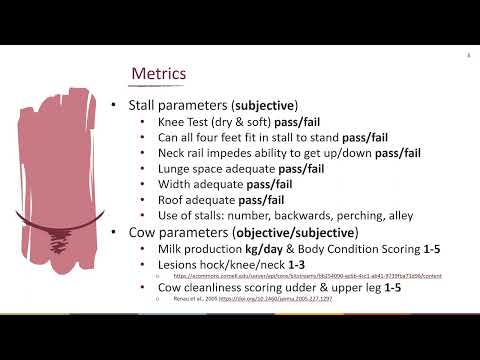
Metrics for Smallholder Dairy Cow Welfare in Kenya

Livestock Data for Decisions LD4D

DAIRY MANAGEMENT TIPS That Will Increase Your Milk Production

Imagine Business

Dairy Farming In Kenya: All you need to know on How to choose what to feed your Dairy Cows.

dairy networks

Lesson 8.2~12 min

Contagious or Environmental

In this lesson
  • Name the main contagious mastitis pathogens and how they move between cows
  • Identify the primary reservoir for environmental mastitis pathogens
  • Choose the correct control strategy for the type of mastitis a herd actually has

There is one question you must answer before you spend a shilling on mastitis control: is your problem contagious or environmental? Get it wrong and you will work hard, spend money and see no improvement at all, because the two problems come from completely different places and are fixed by completely different actions.

Contagious mastitis spreads from cow to cow. The organisms live in the infected udder, and they move to the next cow mainly at milking time. The named contagious pathogens in the veterinary literature are Staphylococcus aureus, Streptococcus agalactiae, and Corynebacterium bovis.

How do they travel? On your hands. On a shared washing cloth dipped in a communal bucket and used on one cow after another. On the milking machine cluster or the bucket unit if you have one. The route is short, direct and entirely under your control.

So the control for contagious mastitis is milking hygiene and milking order:

  • Wash your hands before you handle any udder, and between cows.
  • Use an individual cloth or paper towel per cow, never one cloth dipped back into a shared bucket. That shared wet cloth is a direct transmission route from an infected cow to a clean one.
  • Disinfect equipment between cows if you use any.
  • Milk known-infected and suspect cows last, or with separate equipment and separately washed hands, so infection is never carried forward to a clean cow in the same session.

Environmental mastitis is different. Those organisms are not living in another cow's udder waiting for a lift. They are living in the cow's surroundings. Bedding is named as the primary reservoir, with contaminated water, teat dips and mud also implicated.

That list is a housing list, not a milking list. Every item on it comes from the previous module: wet bedding, a flat platform where urine pools, a mud yard that needed 40 to 60 square metres per animal and got five, dirty drinking water, a teat dip container that has been standing open collecting dirt.

So the control for environmental mastitis is cleanliness between milkings, not at milking:

  • Dry, clean bedding, changed often enough to stay dry.
  • A lying platform that drains, at the 2 to 4 percent slope from the housing module.
  • A well-drained yard, paved if it cannot be given the space an earth yard needs.
  • Clean drinking water.
  • Clean, uncontaminated teat dip, made up fresh as directed.

Now put the two together and see why the diagnosis matters so much. Milking hygiene fixes a contagious problem and does very little for an environmental one. A farmer with a wet, dirty lying area can wash his hands between every cow, use a fresh towel per cow, and disinfect everything he owns - and the cows will keep getting infected, because they lie down in the source every night. The reverse is equally true. A farmer with beautifully dry bedding who uses one wet cloth on six cows in a row is running a transmission line straight from his worst cow to his best.

So how do you tell which one you have? You will not get certainty without laboratory culture, and remember from Lesson 1 that 30 to 40 percent of clinical samples culture negative anyway. But the pattern tells you a great deal, and pattern is free.

A contagious problem tends to spread. Test your cows, and test them again a week or a month later, and you see infection appearing in animals that were clear before, moving through the herd in the order you milk them. It tends to persist in the same cows and quarters over long periods, because organisms like Staph aureus establish themselves deep in the gland.

An environmental problem tends to be scattered rather than spreading. Cases appear without following your milking order. They often cluster in time - after heavy rain, when the yard is worst, or when the bedding has not been changed. New cases appear in cows that were previously clean and clear up, then appear in others.

The honest position is that many herds have both, in different proportions, and the right answer is usually to work out which one is dominant and attack that first while doing the cheap basics of the other. But you must decide. A control plan that says "improve everything" is a plan that improves nothing, because your time and money run out before the actual source is touched.

Write your answer down, with the evidence you based it on. Then re-test in a month and see whether the pattern moved the way your diagnosis predicted. If it did not, your diagnosis was wrong and you have just learned something more useful than any amount of general advice.

Named contagious pathogens
Staph aureus, Strep agalactiae, Corynebacterium bovis
These live in the infected udder and move cow to cow at milking, chiefly on hands, shared cloths and equipment
Primary environmental reservoir
bedding
Named directly in the veterinary literature, with contaminated water, teat dips and mud also implicated. Every item on that list is a housing problem
Control for contagious mastitis
milking hygiene and milking order
Hands washed between cows, one cloth or towel per cow, equipment disinfected, and known-infected cows milked last
Control for environmental mastitis
cleanliness between milkings
Dry bedding, a draining platform, a well-drained yard, clean water and clean teat dip. Milking hygiene alone will not fix it
Do this today: look at how you wash udders. If there is one cloth in one bucket serving more than one cow, stop that today and put out a separate cloth or towel for each cow. That single change breaks the main contagious route.

Recommended viewing

These are free videos made by other people, not by rise AFRICA skills. Each one was checked against YouTube and is on topic. The written lessons are the course. Treat these as useful extra watching.

Revolutionizing Dairy Farming in Kenya: Advanced Techniques & Expert Insights

AIM Agriculture Farm

Metrics for Smallholder Dairy Cow Welfare in Kenya

Livestock Data for Decisions LD4D

DAIRY MANAGEMENT TIPS That Will Increase Your Milk Production

Imagine Business

Lesson 8.3~12 min

Somatic Cell Count

In this lesson
  • Define somatic cell count and explain what a rising count means
  • State the cow-level and bulk-tank threshold figures and where they come from
  • Explain why the legal bulk-tank limit must come from your own regulator

Somatic cell count, usually written SCC, is the laboratory standard for measuring udder health. The name sounds technical but the idea is simple. Somatic cells are body cells - mostly white blood cells - and they appear in milk when the udder is fighting infection. The cow sends white cells into the gland to deal with bacteria, and some of them end up in the milk. Count them, and you have a direct measure of how much fighting is going on.

SCC is counted in cells per millilitre of milk, and the numbers are large, so they are usually written in thousands.

Here are the sourced figures.

An individual cow's SCC, whether from one quarter or from her composite milk, of 200,000 cells per millilitre or higher indicates a high likelihood of infection. That is the working threshold for saying this cow probably has something.

But inflammatory changes can begin at levels as low as 100,000 cells per millilitre. So 200,000 is not a wall with health on one side and disease on the other. It is a decision point on a rising scale, and a cow moving from 80,000 to 150,000 is already telling you something even though she is under the threshold.

For a whole herd, a bulk-tank SCC below 200,000 cells per millilitre is described as a desirable herd target. Bulk tank means the pooled milk from all the cows, which is what a cooperative or processor actually receives, and it is an average weighted by how much milk each cow contributes. That has an important consequence: a high-cell-count cow giving very little milk gets diluted in the tank, while a high-cell-count cow giving a lot of milk moves the whole tank figure. A bulk tank result tells you the herd is in trouble, but it never tells you which cow.

Now the regulatory point, and it is important that you hear it clearly. Bulk-tank SCC limits for the legal sale of milk are set by national and regional authorities and differ by country. This course does not know your limit and will not print one. The 200,000 figure above is a management target described in the veterinary literature, not a legal maximum anywhere in particular.

The figures for the actual limit that binds you must come from your own dairy regulator - in Kenya that would be the Kenya Dairy Board and the Kenya Bureau of Standards, and every country has an equivalent dairy board or bureau of standards. If you sell to a cooperative or a processor, they will also have their own acceptance standard, which may be tighter than the legal one. Ask both. Write the answers down with the date, because standards get revised.

What should you do with an SCC result when you get one? Three things.

First, treat it as a screening signal, not a diagnosis. A high count says there is inflammation. It does not say which organism, or whether the cause is contagious or environmental. That still needs the pattern reasoning from Lesson 2 and, where you can get it, culture.

Second, track it over time rather than reading single results. One high result could be a cow at the very end of lactation, or a sample taken badly. Two or three high results a week or a month apart is a persistent infection, and persistent infections are the ones eating your yield all lactation.

Third, if you can get quarter-level results rather than composite, do. Infection lives in individual quarters. A cow with three excellent quarters and one badly infected one has a moderate composite count that hides a serious problem, and only quarter-level testing shows you where to act.

Here is the practical difficulty for most smallholders, stated honestly. Laboratory SCC testing needs a laboratory. If there is no milk-recording service, no cooperative laboratory and no veterinary laboratory within reach of you, you will not get an SCC number, and no amount of wanting one will produce it.

That is exactly why the next lesson exists. The California Mastitis Test does the same job at the cow's side, with a plastic paddle and a bottle of reagent, in about twenty to thirty seconds per cow. It gives you a score rather than a precise count, and the correspondence between the score and an SCC number is approximate. But it is available, it is cheap, it needs no electricity and no laboratory, and it turns the invisible disease of Lesson 1 into something you can act on this morning.

So learn what SCC means, ask your buyer and your regulator what limit applies to your milk, and then get a CMT paddle, because that is the tool you will actually hold in your hand.

Individual cow SCC indicating likely infection
200,000 cells/mL or higher
A management threshold from the veterinary literature, for a quarter or composite sample. Not a legal limit anywhere in particular
SCC at which inflammatory changes can begin
as low as 100,000 cells/mL
The threshold is a decision point on a rising scale, not a wall. A cow climbing from 80,000 toward 150,000 is already telling you something
Desirable bulk-tank herd target
below 200,000 cells/mL
Bulk tank is the pooled herd milk, weighted by volume, so a high-count cow giving little milk is diluted. It tells you the herd is in trouble, never which cow
Legal bulk-tank SCC limit for milk sale
set by your national authority - ask them
Limits are set nationally and differ by country. Ask your dairy board or bureau of standards, and also ask your own buyer, whose standard may be tighter
Do this today: telephone or visit your milk buyer, cooperative or dairy board and ask two questions - what is the somatic cell count limit for the milk you sell, and do they test for it. Write both answers down with today's date.

Recommended viewing

These are free videos made by other people, not by rise AFRICA skills. Each one was checked against YouTube and is on topic. The written lessons are the course. Treat these as useful extra watching.

DAIRY MANAGEMENT TIPS That Will Increase Your Milk Production

Imagine Business

Revolutionizing Dairy Farming in Kenya: Advanced Techniques & Expert Insights

AIM Agriculture Farm

Metrics for Smallholder Dairy Cow Welfare in Kenya

Livestock Data for Decisions LD4D

Lesson 8.4~12 min

Doing the California Mastitis Test

In this lesson
  • Perform the CMT correctly, including the two timing limits that decide the result
  • Read and record the five CMT scores and their approximate SCC bands
  • Use the CMT as a relative screening tool where the SCC bands are not locally validated

This is the practical skill at the centre of udder health for a smallholder. It costs a paddle and a bottle of reagent, it takes twenty to thirty seconds per cow, and it converts the invisible disease of Lesson 1 into a score you can write in a notebook.

What you need: a CMT paddle, which is a plastic tray with four shallow round wells, one for each quarter, and CMT reagent, which is a detergent solution usually with a purple dye in it. Nothing else. No power, no laboratory, no thermometer.

How it works: the reagent breaks open the somatic cells in the milk and releases their DNA, which is a long, sticky molecule. The more cells there are, the more DNA is released, and the thicker and more gel-like the mixture becomes. So thickness equals cell count equals inflammation. You are literally seeing the cow's immune response in a plastic tray.

The procedure, step by step:

  1. Discard the first streams of foremilk from each quarter. Do not put these in the paddle. Foremilk sitting in the teat cistern is not representative and will mislead you.
  2. Draw about a teaspoon, roughly 2 millilitres, of milk from each quarter into its own well of the paddle. Keep track of which well is which quarter. Front left in the front left well, and so on, every time, so your records mean something.
  3. Add an equal volume of CMT reagent to each well. Equal volumes matter - this is why the wells have a marked level.
  4. Rotate the paddle gently in a circular motion to mix, for no more than about 10 seconds.
  5. Read the reaction within about 20 seconds.

Those two timings are not decoration. They are the test. The gel reaction forms and then breaks down again quickly, so a paddle rotated too long or read too late will show you a weak reaction from a badly infected quarter. If you rotate for thirty seconds while chatting and then read it, you have not done the test, you have wasted the reagent.

Now the scoring, and the approximate somatic cell counts each score corresponds to:

  • N, negative: no thickening. Approximately 0 to 200,000 cells/mL. Healthy quarter.
  • T, trace: slight thickening that fades if you keep rotating. Approximately 200,000 to 400,000. Early or subclinical.
  • 1: distinct thickening but no gel forms. Approximately 400,000 to 1,200,000. Subclinical mastitis.
  • 2: immediate thickening with a slight gel. Approximately 1,200,000 to 5,000,000. Serious infection.
  • 3: a firm gel, and the surface rises in the middle of the well as you rotate. Over 5,000,000. Serious infection.

Be honest about what those SCC bands are. They are described as approximate in the source material, and they come from general and North American extension teaching resources. A locally validated African CMT-to-SCC correspondence table was not available for this course, and this module will not invent one. So do not treat a score of 1 as proof of a count of exactly 800,000.

That caveat costs you nothing in practice, because the CMT's real power is as a relative tool. Test all four quarters of all your cows at the same milking, with the same reagent, by the same hands. Then any quarter reacting more strongly than her herdmates is worth closer attention, and where you can get laboratory SCC or culture, that is the quarter to send. You do not need a validated conversion table to see that three quarters are watery and the fourth is a gel.

How to use it well:

Test every quarter, not one quarter per cow. Infection lives in individual quarters and a cow with one bad quarter and three good ones is common.

Test repeatedly and write it down. One test is a snapshot. Two tests a week apart separate a passing irritation from a persistent infection, and it is the persistent ones that eat your lactation.

Record the quarter by name. "Cow 2, front left, score 2" is a record you can act on next month. "Cow 2 had a problem" is not.

Test before drying off. This matters enormously for the next lesson, because knowing which quarters are infected before the dry period is what allows a treatment decision to be made on evidence instead of guesswork.

And one thing the CMT does not do, which you must never forget. It measures inflammation. It does not detect brucellosis, bovine tuberculosis, or antibiotic residues. A CMT-negative cow can still be shedding organisms that are dangerous to the person drinking her raw milk. That is a completely separate subject, and it is coming later in this course.

Milk volume per well
about 2 mL, roughly a teaspoon
Drawn from each quarter into its own well after discarding the foremilk, then mixed with an equal volume of reagent
Mixing time
no more than about 10 seconds
Gentle circular rotation. Over-rotating breaks down the gel and makes a badly infected quarter read as healthy
Reading time
within about 20 seconds
The visible gel reaction breaks down again quickly after that. Read late and you have wasted the reagent rather than done the test
CMT score bands
N, T, 1, 2, 3 - approximately 0-200,000 up to over 5,000,000 cells/mL
The SCC bands are described as approximate and come from general and North American extension sources. No locally validated African table was available; use CMT as a relative comparison between quarters
Do this today: find out where you can buy a CMT paddle and reagent - agrovet, cooperative or veterinary officer - and write down the name, the contact and the price. If one is available, buy it and test one cow before the week is out.

Recommended viewing

These are free videos made by other people, not by rise AFRICA skills. Each one was checked against YouTube and is on topic. The written lessons are the course. Treat these as useful extra watching.

Revolutionizing Dairy Farming in Kenya: Advanced Techniques & Expert Insights

AIM Agriculture Farm

How I Make KSH 63,500 per month from milking my three dairy cows (learn from John's success story)

Shamba Tours

Metrics for Smallholder Dairy Cow Welfare in Kenya

Livestock Data for Decisions LD4D

Lesson 8.5~12 min

Drying Off Without Losing the Udder

In this lesson
  • Explain why the dry period is the highest-risk window for new udder infection
  • Plan a dry-off date backwards from the service date using gestation length
  • List the non-drug dry-period practices that reduce new infection at no cost

The dry period is the deliberate rest between the end of one lactation and the next calving. The udder tissue regresses, then rebuilds, ready for the lactation to come. Skip it or shorten it and the next lactation suffers.

The recommended dry period length is 45 to 60 days. Be clear where that figure comes from: it is temperate dairy-system extension guidance. A specific African smallholder recommendation, and any evidence on outcomes from shorter or longer dry periods in African crossbred or zebu cows, was not available for this course. Use 45 to 60 days as the standard target while knowing exactly what it is and is not.

Now plan it. Gestation in a cow is about 283 days. If you want the dry period to start 45 to 60 days before calving, then drying off should begin at roughly day 223 to 238 of pregnancy, which is about seven and a half months into gestation.

Work the arithmetic yourself so you trust it:

  1. Gestation length: 283 days.
  2. Take off 60 days for the longer dry period: 283 minus 60 equals 223.
  3. Take off 45 days for the shorter: 283 minus 45 equals 238.
  4. So dry-off falls between day 223 and day 238 after the successful service.

The practical consequence is one of the best habits in this whole course: the day you confirm a cow is pregnant, count forward and write the dry-off date on your calendar. Do not wait to "notice" her yield dropping. Yield drops for a dozen reasons and by the time it is obvious you may already be inside the window.

Now the reason this lesson sits inside an udder health module. The transition into the dry period is one of the highest-risk windows in the whole year for a cow to pick up a new mastitis infection.

Two things happen at once. The udder stops being emptied regularly, so any bacteria that get in are no longer being flushed out twice a day. And the teat canal - the narrow channel that is the physical barrier keeping bacteria out of the gland - takes time to seal after the last milking. For that period the door is neither being cleaned nor closed.

That is why dry cow management is a subject at all, and why standard commercial practice exists around it. In commercial systems, dry cow therapy means infusing an antibiotic product formulated for intramammary use into each quarter immediately after the final milking before drying off, one tube per quarter. The products commonly contain penicillin, cloxacillin, a cephalosporin or novobiocin. Internal teat sealants, used either alongside an antibiotic or instead of it in lower-risk cows, are described as reducing new infections during the dry period.

Whether to treat every quarter of every cow with antibiotic at drying off, or to reserve antibiotic treatment for cows and quarters with a diagnosed infection and use a non-antibiotic teat sealant for the rest, is an active question in dairy practice. That second approach is called selective dry cow therapy.

This course does not recommend blanket antibiotic dry cow therapy as a universal practice. That decision interacts directly with antimicrobial use policy and milk quality regulation in your country, and it is a decision to make with a veterinary officer, not to apply automatically because a book said so. Whatever product is used carries a milk withholding period that must be observed once the cow calves down and rejoins the milking string - and that withholding period is set by the product label and your national authority, never by this course. The next lesson deals with that in full.

Here is what you can do at no cost and with no drug at all, and it applies to every cow whether or not she is treated.

Keep the bedding clean and dry through the whole dry period. Remember from Lesson 2 that bedding is the named primary reservoir for environmental organisms, and this is the window when the teat canal is open and unflushed. A dry cow lying in wet bedding is being challenged at exactly the wrong moment.

Do not crowd dry cows. Crowding means dirtier lying areas and more teat contact with contaminated surfaces.

Keep the teat itself clean and undamaged. A cracked, chapped or injured teat end is a broken barrier.

And test before you dry off. Run the CMT on every quarter in the days before drying off, and write the results down. That single act turns the treatment decision from a guess into evidence, gives your veterinary officer something real to work with, and tells you which quarters to watch most closely when she calves down and comes back into milk.

Recommended dry period length
45 to 60 days
Temperate dairy-system extension guidance. No African smallholder-specific recommendation, and no evidence on shorter or longer dry periods in zebu or crossbred cows, was available for this course
Gestation length
about 283 days
Varies somewhat by breed and by the sex of the calf. It is the number every dry-off and calving plan is built backwards from
Dry-off point in pregnancy
about day 223 to 238
283 minus 60 gives 223, and 283 minus 45 gives 238 - roughly seven and a half months into gestation. Mark it on the calendar the day pregnancy is confirmed
Dry cow therapy
one intramammary tube per quarter after the final milking, where used
Commonly penicillin, cloxacillin, a cephalosporin or novobiocin. Whether to treat all cows or only diagnosed ones is a veterinary decision, and every product carries a withholding period set by its label and your national authority
Do this today: for every pregnant cow you own, find the service date in your records, add 223 days and add 238 days, and write those two dates on a calendar as the dry-off window. If you have no service date recorded, start recording it with the next service.

Recommended viewing

These are free videos made by other people, not by rise AFRICA skills. Each one was checked against YouTube and is on topic. The written lessons are the course. Treat these as useful extra watching.

Metrics for Smallholder Dairy Cow Welfare in Kenya

Livestock Data for Decisions LD4D

DAIRY MANAGEMENT TIPS That Will Increase Your Milk Production

Imagine Business

Dairy Farming In Kenya: All you need to know on How to choose what to feed your Dairy Cows.

dairy networks

Lesson 8.6~13 min

Antibiotics, Residues and the Question You Must Ask

In this lesson
  • State the withholding period principle and name the authorities who set it
  • Explain why one farmer's residue can destroy a whole cooperative's batch
  • Build a treatment record that makes withholding-period compliance automatic

Every veterinary medicine you give a dairy cow has a consequence for the milk. This lesson is about that consequence, and it is the one place in this module where the correct answer is not a number in a book but a question you must go and ask.

The principle first. Any veterinary medicine given to a lactating cow, or to a cow who will soon be lactating, carries a withholding period. That means a defined number of days, or sometimes a defined number of milkings, during which milk from that cow must not be sold or consumed, because the drug or its residues can still be present in the milk.

This applies to more than antibiotics. It applies to dry cow therapy from the previous lesson. It applies to dewormers. It applies to tick treatments. It applies to any hormone product and to any other registered veterinary drug. If it went into the cow, ask about the milk.

Now the part this course will not do. The exact withholding period is set by the national veterinary and medicines regulatory authority. It is specific to the exact registered product and its formulation, not just to the active ingredient. And it differs from country to country. Two products containing the same active ingredient, registered by different manufacturers or in different countries, can carry different withholding periods.

So this course gives you no withholding period for any drug, and you should be suspicious of any book, poster or neighbour who does. If someone tells you "penicillin is three days" as a general fact, they are giving you a number that may be wrong for the exact product in your hand, in your country - and if it is too short, you will sell contaminated milk while believing you followed correct practice. That is precisely the mistake that a printed universal number causes.

What you do instead is a three-step process, and it is not complicated.

  1. Read the product label and the package insert for the specific product used. The withholding period is a legal requirement and it is printed there. Keep the box or the insert until the period has passed.
  2. If in doubt, or if the label is missing or unreadable, ask the veterinary officer or the agrovet who supplied or administered the drug. That is what they are for.
  3. If a whole herd or a whole batch is at risk - for example after an unplanned mass treatment, or if you realise afterwards that treated milk may have gone into a can - contact your buyer or cooperative and your local veterinary authority before you deliver, not after a residue problem is found downstream.

And the standing rule when you genuinely cannot find out: withhold the milk and ask. Not the other way round. Milk withheld for an extra two days costs you two days of income from one cow. Milk sold with residues in it can cost far more, and here is why.

Even a very small volume of antibiotic-contaminated milk mixed into a much larger bulk tank or collection-centre batch can be enough to fail a residue test on the whole batch. Residue screening tests are designed to be highly sensitive, precisely so that they catch contamination.

Think about what that means at a collection point. Twenty farmers deliver into one can. Nineteen of them observed every withholding period correctly. One did not. The batch fails, and the whole can is rejected. Nineteen farmers lose their money because of one person's record-keeping.

That is why withholding-period discipline is not a private matter. In a cooperative it is a collective responsibility, and a cooperative that does not talk openly about it is carrying a risk that will eventually land on all its members at once. Specific residue-test sensitivity thresholds were not available for this course, and they are properly a matter for your buyer's own testing protocol and your national regulator - ask them what test they use and what it detects.

So how do you make this automatic instead of relying on memory? With one page in a notebook. For every treatment given, write down five things:

  • The cow's name or number.
  • The date the treatment was given.
  • The exact product name as printed on the box, not just the active ingredient.
  • The withholding period stated on that label.
  • The calculated date on which that cow's milk can go back into the can.

That last line is the whole point. Do the arithmetic once, at the moment of treatment, when the box is in your hand and the label is in front of you. Write the release date down. Then you are not depending on remembering what a vet said three weeks ago at the end of a long day.

This single record is the difference between confident, legal milk sale and an accidental residue violation that you did not intend and could not have detected yourself.

One more connection to close this module. The whole reason mastitis control matters commercially is that it protects yield and it protects milk quality. But the treatment for mastitis is usually a drug, and every drug creates a withholding period. So every case of mastitis you prevent - through the housing of Module 7, the hygiene of Lesson 2, and the testing of Lesson 4 - is also a treatment you never have to give, a withholding period you never have to observe, and milk you never have to throw away.

Withholding period for any veterinary drug
set by the product label and your national authority - never by this course
Specific to the exact registered product and formulation, not just the active ingredient, and different from country to country
Products that carry a withholding period
antibiotics, dry cow therapy, dewormers, acaricides, hormones and other registered veterinary drugs
If it went into the cow, ask about the milk. Do not assume that only antibiotics matter
Antibiotic residue in a bulk batch
a very small volume can fail the whole batch
Residue screening tests are designed to be highly sensitive. One farmer's mistake can destroy milk pooled from many farmers who did everything right
Residue test sensitivity thresholds
not available - ask your buyer and regulator
Specific detection limits were not retrievable for this course. Ask your cooperative or processor what test they use and what it detects
Do this today: rule five columns in your notebook - cow, date treated, exact product name, withholding period from the label, and date milk is saleable again. Then go and find the label or box of anything you have used recently and fill in the first row.

Recommended viewing

These are free videos made by other people, not by rise AFRICA skills. Each one was checked against YouTube and is on topic. The written lessons are the course. Treat these as useful extra watching.

DAIRY MANAGEMENT TIPS That Will Increase Your Milk Production

Imagine Business

How I Make KSH 63,500 per month from milking my three dairy cows (learn from John's success story)

Shamba Tours

Metrics for Smallholder Dairy Cow Welfare in Kenya

Livestock Data for Decisions LD4D

Knowledge check

Questions from all lessons. Click an answer to see whether it is right and why.

1. What makes subclinical mastitis more economically damaging than clinical mastitis?

A clinical case forces a decision within a day. A subclinical case takes a share of that quarter's milk every day for months, and you never see a signal.

2. What proportion of milk samples from clinical mastitis cases yield no organism on culture?

Three to four in ten come back with nothing grown. That does not mean there was no mastitis - it means the organism did not grow, so a negative culture cannot overrule what you can see.

3. What is the reported range of infected cows in dairy herds generally?

5 to 75 percent of cows, and 2 to 40 percent of quarters. The width of the range reflects genuine differences between herds in hygiene, housing and management.

4. Why is a subclinically infected cow dangerous to the rest of the herd?

She looks like your healthiest animal while acting as the reservoir. That is exactly why contagious mastitis control depends on milking known-infected cows last.

5. Mastitis is best understood as which of these?

Housing breaks the chain at the environment, milking routine at the transfer between cows, teat dip at the open canal, and dry cow management during the weeks the canal is most vulnerable.

6. Which of these is named as the primary reservoir for environmental mastitis pathogens?

Bedding is named directly, with contaminated water, teat dips and mud also implicated. Hands, cloths and clusters are the contagious route, which is a different problem.

7. Which organism is a named contagious mastitis pathogen?

Staph aureus, Strep agalactiae and Corynebacterium bovis are the named contagious pathogens. Brucella and M. bovis are the raw-milk zoonoses covered later in the course.

8. A farmer with excellent milking hygiene still gets constant new mastitis cases. What is the most likely explanation?

Hygiene at milking fixes the contagious form. If cows lie down in a wet, dirty source every night, the infections keep coming no matter how clean the milking is.

9. Why should a single wet washing cloth never serve more than one cow?

A shared cloth dipped back into a communal bucket carries Staph aureus and the other contagious organisms straight from the worst udder in the shed to the next one.

10. How does a contagious mastitis pattern differ from an environmental one over time?

Pattern is free evidence. Write your diagnosis and the evidence down, then re-test in a month and see whether the pattern moved the way you predicted.

11. What are somatic cells in milk?

The cow sends white blood cells into the gland to fight bacteria and some end up in the milk, so counting them measures how much fighting is going on.

12. At what individual-cow SCC is infection considered highly likely?

200,000 or higher indicates a high likelihood of infection, though inflammatory changes can begin as low as 100,000, so the threshold is a decision point, not a wall.

13. Why can a bulk-tank SCC result never tell you which cow has a problem?

A high-count cow giving little milk is diluted, and a high-count cow giving a lot moves the whole figure. The tank tells you the herd is in trouble, not the address.

14. Where does the SCC limit that legally applies to your milk come from?

Limits are set nationally and differ by country, and buyers often set tighter standards than the law. Ask both and write the answers down with a date.

15. Why does this course move straight from SCC to the California Mastitis Test?

CMT gives an approximate score rather than a precise count, but it needs no laboratory and no electricity and takes twenty to thirty seconds per cow.

16. How long should the CMT paddle be rotated?

Rotate gently for no more than about 10 seconds and read within about 20. The gel forms and then breaks down again, so over-rotating hides a real infection.

17. What does the CMT reagent actually do?

More cells means more released DNA, which means a thicker, more gel-like mixture. You are seeing the cow's immune response directly in the tray.

18. A quarter gives a firm gel whose surface rises in the well. What score is that, and what approximate SCC?

A firm gel with a rising surface is score 3, over 5,000,000 cells/mL. Score 2 is immediate thickening with a slight gel, and score 1 is distinct thickening with no gel.

19. How should the CMT-to-SCC bands in this lesson be treated?

The source itself calls the bands approximate. The relative use - which quarter reacts more strongly than her herdmates - needs no conversion table at all.

20. What can the CMT NOT tell you?

CMT measures inflammation only. A CMT-negative cow can still shed organisms dangerous to a raw-milk drinker, which is a separate subject entirely.

21. Why is the dry period a high-risk window for new udder infection?

The barrier is open and the flushing has stopped at the same time. That is exactly why dry cow management exists as a separate subject.

22. A cow was served on a known date. When does the dry-off window fall?

283 days gestation minus a 45 to 60 day dry period gives day 223 to 238. Mark it the day pregnancy is confirmed rather than waiting to notice a falling yield.

23. Where does the 45 to 60 day dry period figure come from?

The course teaches it as the standard extension target while stating plainly what it is. Evidence on shorter or longer dry periods in zebu or crossbred cows was not available.

24. What is selective dry cow therapy?

It is an active question in dairy practice and it interacts with national antimicrobial policy and milk quality regulation, so it is a decision to make with a veterinary officer.

25. Which dry-period practice costs nothing and helps every cow?

Bedding is the named primary reservoir for environmental organisms, and the dry period is when the teat canal is open and unflushed - the worst possible moment for a wet, dirty lying area.

26. Who sets the withholding period for a veterinary drug given to a dairy cow?

It is specific to the exact registered product and formulation, not just the active ingredient, and it differs between countries. Read the label, and ask the vet or agrovet if in doubt.

27. Why is it dangerous to teach a single universal withholding period for a drug?

Two products with the same active ingredient, from different manufacturers or countries, can carry different periods. A printed universal number is a trap, not a help.

28. Why does one farmer's residue mistake matter to a whole cooperative?

Residue tests are deliberately highly sensitive. Nineteen careful farmers can lose their money because of one careless record, which is why this is a collective responsibility.

29. You cannot find the label and cannot reach the vet. What do you do with the milk?

Withhold and ask, never the reverse. Two days of one cow's milk is a small loss against a rejected batch and a residue violation you did not intend.

30. What is the fifth and most important line in a treatment record?

Doing the arithmetic once, with the box in your hand and the label in front of you, removes any reliance on remembering what someone said weeks earlier.

Module 8 capstone

Run a full udder-health audit on your own cows and turn it into a written plan. Step 1: buy or borrow a CMT paddle and reagent, and if you cannot find one locally, write down the name and contact of the nearest agrovet, cooperative or veterinary officer who could supply one. Step 2: CMT-test every quarter of every milking cow you own, at one milking, and write the score for each quarter on a chart - four scores per cow, named by quarter. Step 3: repeat the test seven days later and write the second set of scores beside the first, because one test is a snapshot and two tests show you what is persistent. Step 4: mark every quarter that scored trace or higher on both days. Those are your problem quarters. Step 5: decide, from the pattern, whether your problem looks contagious or environmental - several cows affected in the same quarters and spreading between cows over time points one way; scattered cases linked to a wet, dirty lying area point the other. Write down which you think it is and the evidence for your answer. Step 6: write a one-page control plan matched to that diagnosis, listing the specific changes you will make at milking or in the housing. Step 7: write down the date each cow is due to be dried off, and beside it the name of the veterinary officer you will ask about dry cow treatment and about the withholding period on whatever product is used.

Price check, always. Before you buy ingredients, equipment, or commit to a supplier, call three suppliers and compare prices. Prices and ingredient availability vary widely by region and season. This course teaches the method. You confirm the local numbers with your own research and with your veterinarian or animal nutritionist.