rise AFRICA skills
Dairy Production / Module 5 of 12

Module 5

🥛 Feeding The Dairy Cow

A lactating cow is not a beef animal that happens to give milk. In the weeks after calving she produces more energy in milk than she can possibly eat, and how you manage that gap decides her yield, her fertility and sometimes her life. This module covers what is specific to the dairy animal's body: negative energy balance, the ketosis and fertility costs that follow it, body condition scoring by hand, forage quality, water, and the calcium crisis at calving. It does not build rations, and it says clearly where to go for that.

What you will be able to do after this module

  • Explain negative energy balance in a freshly calved cow
  • Name the blood markers of negative energy balance and their thresholds
  • Score a cow from 1 to 5 using the standard body points
  • Explain why forage quality drives both energy balance and yield
  • Explain why water restriction shows up first as lost milk
  • Explain why calcium demand jumps sharply at calving
Lesson 5.1~12 min

Why The Best Cow Looks Worst After Calving

In this lesson
  • Explain negative energy balance in a freshly calved cow
  • State how far dry-matter intake falls before calving
  • Distinguish a normal energy deficit from one that has gone too deep

In the weeks after calving, the highest-yielding cow in your herd will often be the one that looks worst. Her ribs show, her hips stand out, her coat loses its shine. Farmers see that and conclude something is wrong with her, or with the feed. Usually neither is true. What you are watching is normal, expected, and worth understanding properly, because managing it is most of dairy nutrition.

Here is what happens.

After calving, milk yield climbs steeply toward peak, which arrives at 40 to 70 days in a mature cow. Appetite climbs too, but much more slowly. For several weeks the cow is producing more energy in milk than she is taking in as feed, no matter how good the feed is. She cannot eat fast enough. Her rumen is only so big and her intake takes time to build.

So she covers the shortfall from her own body. She mobilises her own fat and converts it into the energy that goes out in the milk. In effect she is milking off her own back.

The animal-science literature calls this negative energy balance. It is a normal phase of every high-producing lactation, not automatically a sign of mismanagement. Every good dairy cow goes through it. It becomes a problem only when it is too deep or lasts too long.

Now the detail that explains why the deficit starts before the milk does. Dry-matter intake typically falls by more than 30 percent during the final three weeks of gestation. Think about the timing of that. The calf is growing fastest in those last weeks and physically occupying rumen space, so she eats less at exactly the moment she needs to build up. She therefore arrives at calving with her appetite already suppressed, before the energy demand of milk production has even been added.

That single fact reorganises how you should think about feeding. The management of early lactation begins in late pregnancy, not on the day she calves. A cow whose intake collapses in the final weeks enters lactation already behind and spends months catching up.

So what can you actually do?

Two things, and this document is careful not to pretend there is a third.

First, protect and build dry-matter intake before calving. Keep her eating. Palatable forage, no sudden feed changes in the last weeks, clean water, comfortable housing, no competition at the feed trough, no heat stress. Anything that reduces how much she eats in late pregnancy makes the deficit that follows deeper.

Second, make the early-lactation ration as energy-dense as your feed base allows. If she cannot eat more volume, the only remaining lever is more energy per mouthful. There is a limit set by rumen health, which is why this cannot be done by simply piling on concentrate.

How do you know the deficit has gone too far? Not from a blood test, which most smallholders cannot access. From your hands and your records.

A steady, gradual loss of condition through early lactation, which then stops and recovers through mid lactation, is the expected healthy pattern. Rapid loss, or loss that does not recover, is the warning sign. The next two lessons show you how to measure that by hand and what the deep deficit costs you.

One boundary before going further. This module will not tell you how many kilograms of which feed to give. Working out crude protein and energy requirements by liveweight and yield, and building a balanced ration from the feeds you can actually get, is a full skill with its own arithmetic, and this platform sells a separate course on cattle and steer feed formulation that does it properly. Take that course to build a ration. Use this module to understand what the ration is for, when the cow is most vulnerable, and how to check by hand whether your feeding is working. Teaching half a ration here would be worse than teaching none.

What this module does uniquely is the dairy-specific part: the energy crisis of early lactation, the fertility that hangs on it, the body condition scoring that measures it, and the calcium emergency at calving. Those belong to the dairy cow and to nothing else.

Negative energy balance
a normal phase of every high-producing lactation
Yield climbs faster than appetite, so she funds the gap from body fat. It is a problem only when it is too deep or lasts too long
Intake fall before calving
more than 30 percent in the final three weeks of gestation
The calf is growing fastest and occupying rumen space, so she enters lactation with appetite already suppressed before milk demand is added
Peak yield timing
40 to 70 days after calving in mature cows
The deficit runs from calving toward this peak. The gap between rising yield and slower-rising appetite is what she covers from her own body
The two available levers
protect intake before calving, raise energy density after
If she cannot eat more volume, more energy per mouthful is the only remaining lever, and that is limited by rumen health
Do this today: look at your most recently calved cow and write down whether she is losing condition slowly or fast. Then check what she was eating in her last three weeks of pregnancy, because that is where the answer usually starts.

Recommended viewing

These are free videos made by other people, not by rise AFRICA skills. Each one was checked against YouTube and is on topic. The written lessons are the course. Treat these as useful extra watching.
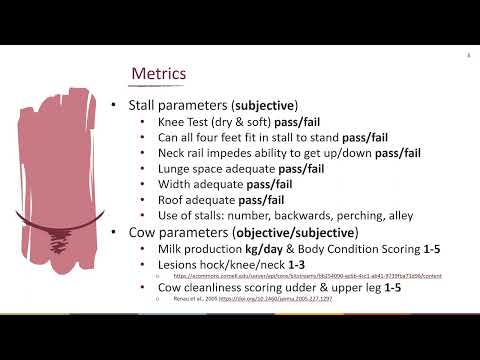
Metrics for Smallholder Dairy Cow Welfare in Kenya

Livestock Data for Decisions LD4D

Dairy Farming In Kenya: All you need to know on How to choose what to feed your Dairy Cows.

dairy networks

DAIRY MANAGEMENT TIPS That Will Increase Your Milk Production

Imagine Business

Lesson 5.2~12 min

What A Deep Energy Deficit Actually Costs

In this lesson
  • Name the blood markers of negative energy balance and their thresholds
  • Link body condition loss to a measured fall in conception rate
  • Recognise the signs of subclinical ketosis in the first weeks after calving

The last lesson said that negative energy balance is normal but becomes a problem when it goes too deep. This lesson puts numbers on what too deep costs, because the price is higher than most farmers expect and it is paid in the currency this whole course cares about: the calving interval.

First, what is happening chemically.

When a cow mobilises body fat, the fat enters her bloodstream as non-esterified fatty acids, usually written NEFA. A rising NEFA level is the physiological signature of negative energy balance. NEFA concentrations above 0.4 millimoles per litre in the 7 to 10 days before calving are associated with increased risk of displaced abomasum, retained placenta, and reduced early-lactation milk yield.

Notice the timing in that sentence. Before calving. The damage is already being set up while she is still dry.

If the liver cannot process all the mobilised fat, the surplus is converted into ketone bodies, chiefly beta-hydroxybutyrate, written BHB. A BHB level above 1.2 millimoles per litre is considered abnormal. Subclinical ketosis, defined as serum BHB above roughly 1,200 to 1,400 micromoles per litre, in the first or second week after calving, is associated with displaced abomasum, metritis, and prolonged failure to resume cycling after calving.

That last item deserves your full attention. Prolonged postpartum failure to resume cycling. The reproduction module told you that the anestrus period after calving averages 60 days but ranges from 17 to 150. This is a large part of why. A cow in deep energy deficit does not start cycling, and until she cycles she cannot be served, and until she is served the calving interval keeps growing.

Subclinical means you cannot see it. She is not down, not obviously sick, just quietly not recovering. That is what makes it dangerous.

Now the figure that ties nutrition to money more directly than anything else in this course. There is an approximate 10 percent decrease in conception rate for every 0.5 point of body condition score lost between calving and insemination.

Work through what that means. A cow that loses a full point of condition between calving and service has, on this figure, lost about 20 percent of her conception rate. She needs more services. Each failed service is 21 days. Three extra weeks here, three extra weeks there, and you are looking at exactly the kind of gap that turns a 400-day calving interval into a 600-day one.

The mechanism is documented too. Cows in deep negative energy balance show suppressed luteinising-hormone pulse frequency, which is the hormonal signal driving ovulation, and reduced egg quality from the combination of low blood glucose and high NEFA. So it is not only that she does not show heat. Even when she is served, the pregnancy is less likely to establish.

Now two honest cautions about these numbers.

The source is a review paper synthesising the wider dairy-science literature, which is largely not African. African-measured NEFA and BHB thresholds, and conception-rate effects specific to zebu or crossbred cows under smallholder management, were not available for this course. Teach yourself the mechanism and treat the thresholds as general dairy-cow physiology rather than as figures validated in your own herd.

And be realistic about testing. NEFA and BHB are blood tests. Most smallholders will never run one. That does not make them useless to know, because they explain why the free tool in the next lesson works. Body condition scoring is a proxy for exactly this chemistry, done with your hands, at no cost, and it is the reason the next lesson is the most practical one in the module.

What can you actually act on today?

Watch the late-dry-period cow closely, because the NEFA threshold is crossed before calving. Watch the freshly calved cow in weeks one and two for the quiet, non-obvious failure to pick up. And score condition by hand every month so that a loss of half a point is something you notice and can name, rather than something you only see when it has become a whole point and the conception rate has already gone.

NEFA threshold before calving
above 0.4 mmol/L in the 7 to 10 days before calving
Associated with increased risk of displaced abomasum, retained placenta and reduced early-lactation yield. From a largely non-African review, not validated in African herds
BHB abnormal threshold
above 1.2 mmol/L
Ketone bodies rise when the liver cannot process mobilised fat. Subclinical ketosis is serum BHB above roughly 1,200 to 1,400 micromoles per litre
Conception cost of condition loss
about 10 percent lower conception per 0.5 body condition score lost
Measured between calving and insemination. A full point lost means roughly 20 percent, which is several extra 21-day cycles on the calving interval
African-specific thresholds
not available for this course
No African-measured NEFA or BHB thresholds or conception effects for zebu and crossbred cows under smallholder management could be obtained. Treat the figures as general physiology
Do this today: put your hands on every cow that calved in the last month, feel over the tailhead and ribs, and write down whether she feels the same as last month or thinner. That is the free version of the blood test.

Recommended viewing

These are free videos made by other people, not by rise AFRICA skills. Each one was checked against YouTube and is on topic. The written lessons are the course. Treat these as useful extra watching.

Revolutionizing Dairy Farming in Kenya: Advanced Techniques & Expert Insights

AIM Agriculture Farm

Metrics for Smallholder Dairy Cow Welfare in Kenya

Livestock Data for Decisions LD4D

DAIRY MANAGEMENT TIPS That Will Increase Your Milk Production

Imagine Business

Lesson 5.3~12 min

Body Condition Scoring With Your Hands

In this lesson
  • Score a cow from 1 to 5 using the standard body points
  • Interpret scores below 2.0 and at or above 4.0
  • Set up a monthly scoring record that gives early warning

This is the most useful tool in the module, and it costs nothing. Body condition scoring is a hands-on assessment of how much fat cover a cow is carrying. No laboratory, no equipment, no fee. Just your hands, five minutes and a notebook.

Where to feel. The standard points are the tailhead, the hooks and pins, which are the two sets of hip bones, the spine, and the ribs. You look at the shape those bones make under the skin, and then you put your hand on them, because a hairy or a wet cow can hide a great deal from the eye alone. Feel whether the bones are sharp and prominent or covered and rounded.

The scale runs from 1 to 5, typically scored in increments of 0.25. Those quarter-point steps are not fussiness. Half a point is the difference the previous lesson connected to a 10 percent change in conception rate, so you need to be able to see a change smaller than that if you want warning before it matters.

The two boundary figures to remember:

A score below 2.0 is seriously under-conditioned and needs immediate attention. This cow has no reserve left to draw on, and the energy deficit of early lactation has nothing to work with.

A score of 4.0 or higher is over-conditioned and needs controlled weight loss. Controlled is the important word. A fat cow should not be starved thin, because rapid fat mobilisation is exactly the mechanism that causes the ketosis problems in the last lesson.

The range between 2.0 and 4.0 is the zone that needs the closest routine management attention. That is where most of your cows will be, and where the small movements that matter happen.

Now an honest limitation, and it is an important one. Specific numeric targets for what a cow should score at calving, at breeding and at dry-off could not be sourced in full for this course, so this module gives none. If you see a course or a poster stating a precise target score at calving, ask where it came from and what system it was measured in.

What is safe and important to teach is the structural principle, and it is enough to manage on. A cow should not calve down either very thin or very fat. Both extremes cause trouble in early lactation. A fat cow mobilises fat faster and is at greater ketosis risk. A thin cow has no reserve at all to draw on during the energy deficit, so she has nothing to give and her milk and her fertility both suffer.

And there is a movement limit that is sourced. A cow should not lose more than about half a body condition score point in early lactation, and should not gain more than about half a point in late lactation, roughly 27 kg of bodyweight change either way. Swings larger than that in either direction are a sign that your feeding is not matching her stage of lactation.

So the practical system.

Score every animal you own on the same day of every month. Write the score, the date and her days since calving, in that order, on her page. Days since calving is what makes the score interpretable, because a 2.5 at day 30 and a 2.5 at day 250 mean completely different things.

Then read the pattern rather than the single number. The healthy pattern is a steady, gradual loss through early lactation followed by recovery through mid and late lactation. That is what a well-fed cow doing her job looks like.

What you are hunting for is rapid loss, or loss that does not recover. Either of those is the earliest warning sign of an energy or a health problem available to you, and here is the point that makes the whole exercise worthwhile: it appears earlier than a drop in milk yield. By the time yield falls, the cow has been in trouble for some time. Your hands find it first.

One more use for the record. When you consider buying an animal, score her before you agree a price, and score her again a month after she arrives. A cow that loses condition fast on your farm is telling you that your feed base does not support her, and that is information worth having early rather than at her next calving.

The scale
1 to 5, scored in increments of 0.25
Quarter-point steps matter because half a point of loss is linked to roughly a 10 percent fall in conception rate, so you need to see smaller changes than that
Seriously under-conditioned
below 2.0
Needs immediate attention. She has no reserve to draw on during the early-lactation energy deficit, so both milk and fertility suffer
Over-conditioned
4.0 or higher
Needs controlled weight loss, never rapid loss, because fast fat mobilisation is the mechanism that produces ketosis
Numeric targets at calving, breeding and dry-off
not available for this course
No specific target scores could be sourced in full, so none are given. The teachable rule is that she should calve neither very thin nor very fat
Do this today: put your hand on the tailhead and ribs of every animal you own, give each a score from 1 to 5 in quarter points, and write it with the date and her days since calving. Repeat on the same date next month.

Recommended viewing

These are free videos made by other people, not by rise AFRICA skills. Each one was checked against YouTube and is on topic. The written lessons are the course. Treat these as useful extra watching.

Revolutionizing Dairy Farming in Kenya: Advanced Techniques & Expert Insights

AIM Agriculture Farm

Metrics for Smallholder Dairy Cow Welfare in Kenya

Livestock Data for Decisions LD4D

DAIRY MANAGEMENT TIPS That Will Increase Your Milk Production

Imagine Business

Lesson 5.4~12 min

Forage Quality: The Biggest Lever You Own

In this lesson
  • Explain why forage quality drives both energy balance and yield
  • Assess your own forage by stage of cutting, storage and waste
  • Plan a feed base around the worst month rather than the best

Within any given breed or cross, a lactating cow's forage intake and its quality is the single largest lever on both her energy balance and her milk yield. That is a structural fact, not a number, and it is worth stating plainly because so much farmer attention goes to concentrate, which is bought, visible and expensive, while forage, which is grown and taken for granted, is doing most of the work.

Start with what quality actually means in practice, since you cannot send your napier to a laboratory.

Stage of cutting is the biggest single factor you control. Grass cut young is more digestible and more nutritious; grass allowed to grow tall and stemmy before cutting has more bulk and less feeding value. A cow eating stemmy, mature forage fills her rumen and still goes short of energy, which is precisely the deficit this module has been describing. She looks like she is eating plenty, because she is, and she still loses condition.

That is the trap. Full rumen, empty cow.

What you can assess without any equipment:

  • How stemmy is it? Leafy is better than stalky. If it snaps like a stick rather than bending, it was cut too late.
  • Colour and smell in stored forage. Sweet-smelling and green is good, mouldy or musty is a problem and can be a health risk, not just a quality one.
  • What actually gets eaten. Watch the feed trough after she has finished. What she leaves behind is the part with no value to her, and if she leaves a lot, your effective feeding is much lower than your measured feeding.
  • Waste in storage. Forage rained on, trampled, or left where animals foul it is forage you grew and did not feed.

Now the planning point that matters more than any of the individual checks. Plan your feed base on the worst month of the year, not the best.

Everybody plans on the green season, because that is when the animals look well and the decisions feel easy. But the year has a dry season, and the cow has to be in milk and in calf during it. The gap between what you can feed in the green season and what you can feed in the dry season is where condition is lost, cycling stops, and calving intervals stretch.

Remember the sourced finding from the reproduction module: households with access to communal grazing had calving intervals up to 428 days shorter than those without. That is one of the largest effects measured anywhere in this course, and it is a feed effect. Feed availability was worth well over a year of calving interval. Nothing in this course rewards attention more than making sure there is something adequate to eat every month of the year.

So the questions to answer for your own farm are these. What do I feed in the worst month? How much of it is there? Can I conserve some of the green-season surplus, by hay or by silage, so that the dry season is less severe? Can I grow a fodder crop, or plant along boundaries and contours, so that the total supply rises? Those are the real questions of a dairy feed base, and every one of them is answered a season before it is needed.

Now the boundary of this module, stated again clearly because it matters.

This is not a ration-formulation course. Working out how much dry matter your cow needs at her liveweight and yield, what crude protein and energy levels that requires, what your local feeds actually supply, and how to combine them into a balanced ration is a genuine skill with real arithmetic behind it. This platform sells a separate course on cattle and steer feed formulation which teaches exactly that, with the requirement tables and the worked calculations.

What this module gives you is the dairy-specific frame around that skill: when in her cycle she is most vulnerable, what her body is doing at each stage, how to check by hand whether the feeding is working, and which cheap non-feed factors, especially water in the next lesson, can undo good feeding entirely.

Use both. Understand the cow here, build the ration there. A farmer who knows the shape of the year and can score condition by hand will get far more out of a formulation course than one who arrives with neither.

Forage as a lever
the single largest lever on energy balance and yield within a breed
A structural point, not a figure. Concentrate gets the attention because it is bought and visible, but forage is doing most of the work
Stage of cutting
the biggest quality factor you control
Young leafy material is more digestible than tall stemmy material. Mature forage fills the rumen while still leaving her short of energy
Effect of feed access on calving interval
up to 428 days shorter with communal grazing access
Measured in the Kenyan smallholder study. One of the largest effects in this course, and it is a feed effect rather than a genetic one
Ration formulation
covered by the separate feed formulation course
Requirement tables, crude protein and energy arithmetic and ration building belong there. This module frames when and why the cow is vulnerable
Do this today: walk to where your forage is stored or growing, and cut or pick up a handful. If it snaps like a stick rather than bending, you are cutting too late, and that alone is costing you condition.

Recommended viewing

These are free videos made by other people, not by rise AFRICA skills. Each one was checked against YouTube and is on topic. The written lessons are the course. Treat these as useful extra watching.

Kenya-Kirinyaga County Feeding Dairy Cows

digitalgreenorg

Metrics for Smallholder Dairy Cow Welfare in Kenya

Livestock Data for Decisions LD4D

Dairy Farming In Kenya: All you need to know on How to choose what to feed your Dairy Cows.

dairy networks

Lesson 5.5~12 min

Water: The Cheapest Thing You Can Get Wrong

In this lesson
  • Explain why water restriction shows up first as lost milk
  • Assess water availability, cleanliness and access on your own farm
  • Plan washing water separately from drinking water

Milk is roughly seven-eighths water. Every litre you sell leaves the farm mostly as water that the cow drank, so her water intake rises sharply as her milk yield rises. This makes water the cheapest input in dairy and the easiest one to get quietly wrong.

Start with the honest gap. A sourced figure for how much water an African dairy cow drinks per litre of milk produced was not available for this course, so no such figure is given here. Anyone who quotes you a precise ratio should be asked where it came from. What is safe, sourced and entirely sufficient to act on is the principle: a milking cow's water access and water quality should be treated as seriously as her feed.

And here is the fact that makes it urgent. Any restriction on water shows up first as a drop in milk yield, before it shows up as visible thirst.

Think about what that means for a farmer. You will not see a cow standing bellowing for water and then lose the milk. You will lose the milk while everything still looks normal. By the time an animal is visibly thirsty, you have already been paying for it. This is why water cannot be managed by watching the cow. It has to be managed by managing the supply.

So audit the supply, honestly, with these questions.

Is water available at all hours, or only when someone brings it? A cow drinks in bouts, often around feeding and after milking. If water arrives twice a day, she drinks what she can hold twice a day, which is not the same as drinking what she needs.

Is it clean? Water fouled with dung, or standing warm and green, gets refused or drunk in smaller quantities. A cow will not drink her fill from a dirty trough, and a trough that is never scrubbed is a trough that is quietly limiting yield.

Can she actually reach it? In a tie-stall or a small zero-grazing unit, a tethered cow can only drink what is within her reach. A trough placed where a dominant animal blocks it, or too high, or too far, is not the supply you think it is.

What happens in the dry season? This is where the plan is really tested. If your water source becomes distant or unreliable for two months of the year, then those two months are when your milk falls, your condition drops and your calving interval grows, and the cause will look like feed when it is partly water.

Now a second water requirement that farmers routinely forget to budget for: the water used for washing.

Housing and hygiene planning has to include the water for cleaning the milking area and the equipment, not only the cow's drinking water. Sourced reference figures per wash, by milking method, are:

  • Hand milking: 10 litres hot and 20 litres cold.
  • Bucket milking: 20 litres hot and 40 litres cold.
  • Pipeline milking: 30 litres hot and 60 litres cold.

Even a smallholder hand-milking one or two cows should plan for at least that order of magnitude of clean water for washing, on top of the cow's drinking water. That is 30 litres a wash before a single drop reaches an animal, and the milking hygiene and milk quality modules explain why skimping on it costs you milk that gets rejected or spoils.

Put the two together and the planning question becomes concrete: where does the drinking water come from, where does the washing water come from, and does either of them fail in the dry season?

A closing thought on why this lesson is short and still important. Nothing in this module is cheaper to fix. Improving forage takes a season. Changing genetics takes generations. Building a better shed takes money. Scrubbing a trough, moving it within reach, and keeping it full takes an afternoon, and the milk it protects is milk you were already growing the feed for. It would be a poor business that spent months improving a ration and then lost the benefit to a dirty trough the cow would not drink from.

Water in milk
milk is roughly seven-eighths water
Which is why intake rises sharply with yield. Every litre sold leaves the farm largely as water the cow drank
Water intake per litre of milk
not available for this course
No sourced figure for African dairy cows could be obtained, so none is given. Treat water access and quality as seriously as feed, and manage the supply rather than the cow
First sign of restriction
a drop in milk yield, before visible thirst
You lose the milk while everything still looks normal, which is why water must be managed by auditing the supply rather than by watching the animal
Washing water per wash
hand milking 10 L hot and 20 L cold; bucket 20 and 40; pipeline 30 and 60
Sourced reference figures by milking method, needed on top of drinking water. Even one or two cows need this order of magnitude of clean water
Do this today: look into every water trough on your farm. If you would not drink from it, scrub it out now, refill it, and check whether every tethered cow can actually reach hers.

Recommended viewing

These are free videos made by other people, not by rise AFRICA skills. Each one was checked against YouTube and is on topic. The written lessons are the course. Treat these as useful extra watching.

Metrics for Smallholder Dairy Cow Welfare in Kenya

Livestock Data for Decisions LD4D

How I Make KSH 63,500 per month from milking my three dairy cows (learn from John's success story)

Shamba Tours

Dairy Farming In Kenya: All you need to know on How to choose what to feed your Dairy Cows.

dairy networks

Lesson 5.6~12 min

Calcium And Milk Fever: The Emergency At Calving

In this lesson
  • Explain why calcium demand jumps sharply at calving
  • Recognise the signs of milk fever and respond correctly
  • Identify which cows in your herd need the closest watching

This lesson covers the one nutrition problem in this module that can kill a cow within hours. Read it before your next calving, not after.

At the moment of calving, a cow's calcium demand jumps sharply, because colostrum and milk both carry large amounts of calcium out of her body. The figures are these: her daily calcium requirement rises from roughly 30 grams a day in the dry period to more than 50 grams a day at the onset of lactation.

That is a sudden, large increase, and her body has to meet it within hours. She has two systems for doing so: absorbing more calcium from her gut, and releasing calcium from her own bones. Both need to ramp up fast.

If they cannot respond fast enough, blood calcium falls. That condition is hypocalcaemia, known to every dairy farmer as milk fever, and it occurs at or shortly after calving.

Despite the name, it is not a fever. It is a collapse. Calcium is what allows muscle to contract, so a cow short of it becomes weak, unsteady, and finally unable to stand.

What to look for, at or within roughly a day of calving:

  • A cow that goes down and cannot rise. This is the classic sign and the one people recognise.
  • Cold ears, and a body that feels cold to the touch rather than warm.
  • Muscle tremors, trembling, unsteadiness on her feet before she goes down.
  • Dullness, going off feed, an S-shaped bend of the neck, an animal that simply is not right within a day of calving.

Now, who is at higher risk? Two groups are named in the literature. Milk fever is reported as more common in older cows, and in certain breeds, with Channel Island breeds, meaning Jersey types, named specifically. If you keep a Jersey or a Jersey cross, and the breed module made a strong commercial case for exactly that animal, then this is the cost that comes with her. Watch her harder around calving than you would watch a zebu-type cow. That is not a reason to avoid the breed. It is a reason to be present at her calving.

How serious is it? Historical mortality without treatment is reported as 60 to 80 percent, with rates as high as 90 percent recorded.

Read that figure correctly. It comes from older clinical literature and describes untreated cases. It tells you how dangerous milk fever is if nothing is done, not what you should expect today. Modern veterinary treatment, which is intravenous calcium given by a trained person, changes the outlook dramatically. A current treatment-success percentage under modern care was not available for this course, so none is given. What you should take from the historical figure is simple: untreated, this kills most of the cows it affects.

So what do you do?

Recognise the signs early and call for veterinary help immediately. This is a genuine emergency, in the same category as a difficult calving. Intravenous calcium administered by a trained person is the standard treatment, and speed matters.

And do not attempt to treat milk fever with a home remedy. Drenching a cow that cannot swallow properly can put liquid into her lungs and kill her faster than the disease. Calcium given the wrong way, or the wrong preparation, can stop the heart. This is one of the few points in this whole course where the correct instruction is to stop and call someone trained.

What about prevention? In commercial dairy systems, prevention by dietary management is well established, including restricting dietary calcium before calving and using anion-rich rations, often called DCAD diets, in the last weeks of the dry period. But these require feed analysis and ration formulation capability that most smallholders do not have, and no evidence of this approach being implemented or evaluated in an African smallholder system was available for this course. So it is described here as something that exists, not as something you are being told to do.

The low-cost prevention that is within your reach is what this module has been teaching throughout. Do not let her calve down over-conditioned. Keep her eating in the last three weeks. Be present around the calving rather than finding her the next morning. And know the number of the person you would call, before you need it.

One last note. If a veterinary calcium product also contains other drugs, there may be a withholding period during which the milk must not be sold. Withholding periods differ by country, by product and by formulation, and are set by your national veterinary authority. Ask what the withholding period is every single time anything is administered, and write it in your treatment record with the date it ends.

Calcium requirement at calving
from roughly 30 g/day dry to more than 50 g/day at the onset of lactation
A sudden jump her gut absorption and bone release must meet within hours. If they cannot, blood calcium falls and milk fever follows
Higher-risk animals
older cows and Channel Island, meaning Jersey-type, breeds
Named specifically in the literature. A Jersey or Jersey cross should be watched harder around calving, which is a reason to be present rather than to avoid the breed
Untreated mortality
60 to 80 percent, with rates as high as 90 percent recorded
From older clinical literature describing untreated cases. It shows how dangerous the condition is, not what to expect under modern veterinary treatment
Current treatment success rate
not available for this course
No current figure under modern veterinary care could be obtained, so none is given. Intravenous calcium by a trained person is the standard treatment and speed matters
Do this today: write the phone number of your nearest vet or trained animal health worker on the shed wall in large figures, and tell everyone in the household what a down cow after calving means.

Recommended viewing

These are free videos made by other people, not by rise AFRICA skills. Each one was checked against YouTube and is on topic. The written lessons are the course. Treat these as useful extra watching.

Revolutionizing Dairy Farming in Kenya: Advanced Techniques & Expert Insights

AIM Agriculture Farm

Metrics for Smallholder Dairy Cow Welfare in Kenya

Livestock Data for Decisions LD4D

DAIRY MANAGEMENT TIPS That Will Increase Your Milk Production

Imagine Business

Knowledge check

Questions from all lessons. Click an answer to see whether it is right and why.

1. Why does a freshly calved high-yielding cow lose condition?

This is negative energy balance, a normal phase of every high-producing lactation. It becomes a problem only when it goes too deep or lasts too long.

2. By how much does dry-matter intake typically fall in the last three weeks of gestation?

The calf grows fastest then and occupies rumen space, so she arrives at calving with her appetite already suppressed before the demand of milk production begins.

3. When does management of early lactation really begin?

A cow whose intake collapses in the final weeks enters lactation already behind and spends months catching up, so the last three weeks of pregnancy are the real starting point.

4. Which pattern of condition change is the expected healthy one?

Some loss is unavoidable because the deficit is real. What matters is that it is gradual and that it recovers, which is why monthly hand scoring is the diagnostic tool.

5. Where should you go to actually build a balanced ration?

Crude protein and energy requirements by liveweight and yield are a full skill with their own arithmetic, and half-teaching them here would be worse than not teaching them.

6. What does a rising NEFA level in a cow's blood indicate?

Non-esterified fatty acids are body fat entering the bloodstream, and above 0.4 mmol/L in the 7 to 10 days before calving they are linked to real disease risk after it.

7. What is the approximate conception-rate cost of losing 0.5 of a body condition score between calving and insemination?

A full point lost therefore costs roughly 20 percent, which converts directly into extra services, each one 21 days added to the calving interval.

8. Why is subclinical ketosis particularly dangerous?

Serum BHB above roughly 1,200 to 1,400 micromoles per litre in the first weeks after calving is linked to displaced abomasum, metritis and prolonged failure to resume cycling.

9. Why does deep energy deficit affect fertility even when the cow is served?

Both the signal that drives ovulation and the quality of the egg itself are affected, so the pregnancy is less likely to establish even when the service is correctly timed.

10. How should the NEFA and BHB thresholds in this lesson be treated?

The source is a review of the largely non-African literature. The mechanism is teachable and useful, but the exact numbers were not confirmed in an African herd.

11. Which body points are used for condition scoring?

You look at the shape those bones make, then feel them by hand, because a hairy or wet coat can hide a great deal of change from the eye alone.

12. What score is described as seriously under-conditioned and needing immediate attention?

She has no reserve left for the early-lactation energy deficit, which means the deficit has nothing to draw on and both milk yield and fertility are affected.

13. How should an over-conditioned cow at 4.0 or above be managed?

The word controlled carries the whole meaning. Fast mobilisation of fat is exactly the mechanism behind the ketosis risk described in the previous lesson.

14. Why does this course give no target score for calving?

The structural principle is sourced and sufficient to manage on: she should calve neither very thin nor very fat, because both extremes cause early-lactation trouble.

15. What makes monthly body condition scoring more valuable than watching milk yield alone?

By the time yield falls, the cow has been in trouble for some time. Rapid loss, or loss that does not recover, shows in your hands first and costs nothing to check.

16. Why can a cow eating plenty of mature stemmy forage still lose condition?

Full rumen, empty cow. Her intake looks adequate by volume while the energy she actually absorbs falls short of what her milk yield is taking out.

17. Which forage quality factor is most under a farmer's control?

Grass cut young is more digestible and nutritious than tall stemmy material, and the decision of when to cut is made entirely by the farmer at no extra cost.

18. How much shorter were calving intervals in households with communal grazing access?

It is one of the largest measured effects in the whole course, and it is a feed effect, showing that year-round feed availability outranks almost every other intervention.

19. Why should the feed base be planned on the worst month rather than the best?

Green-season planning feels easy and looks successful, but the dry-season gap is where calving intervals stretch, which the 428-day finding measures directly.

20. What does this module deliberately not teach?

Ration formulation is a full skill taught properly in the separate cattle and steer feed formulation course, and half-teaching it here would be worse than not teaching it.

21. What is the first sign that a cow's water is restricted?

You lose the milk while everything still looks normal, which is why water has to be managed by auditing the supply rather than by watching the animal for symptoms.

22. Why does this module give no figure for litres of water per litre of milk?

The principle, that water access and quality must be treated as seriously as feed, is sourced and entirely sufficient to act on without inventing a ratio.

23. How much water does the reference give for washing after hand milking?

Bucket milking needs 20 hot and 40 cold, pipeline 30 and 60. Even one or two hand-milked cows require this order of clean water on top of drinking water.

24. Why is water available only twice a day a problem?

Cows drink around feeding and after milking, so a supply that is present only when someone brings it silently caps intake and therefore caps yield.

25. Why does this lesson argue water is the cheapest thing to fix?

The milk it protects is milk you already grew the feed for, so losing that benefit to a trough the cow will not drink from wastes months of other work.

26. How does a cow's daily calcium requirement change at calving?

Colostrum and milk both carry large amounts of calcium out of her body, and her gut absorption and bone release must ramp up to meet that jump within hours.

27. Which cows are reported as being at higher risk of milk fever?

It is named specifically in the literature, and since the breed module made a commercial case for Jersey crosses, this is the management cost that comes with that choice.

28. What is the correct response to a cow down with suspected milk fever?

Drenching a cow that cannot swallow properly can put liquid into her lungs, and calcium given wrongly can stop the heart. This is one of the few points where the right action is to call.

29. How should the 60 to 80 percent mortality figure be understood?

It comes from older clinical literature on untreated cases. Modern intravenous calcium changes the outlook dramatically, though a current success rate was not available for this course.

30. Why is DCAD-style dietary prevention described but not recommended here?

It is well established in commercial systems, so it is described as something that exists rather than as an instruction, and the low-cost prevention within reach is condition, intake and presence at calving.

Module 5 capstone

Run a full nutrition audit on your own cow and write the findings down. Step 1: score the body condition of every animal you own, by hand, on the 1 to 5 scale, using the tailhead, hooks, pins, spine and ribs. Write each score with today's date, and repeat it on the same day of every month from now on. Step 2: for each cow, write beside her score her days since calving, so you can tell whether her condition matches her stage. Step 3: list every feed you actually gave your cattle in the last seven days, with a rough quantity for each, separating forage from anything purchased. Step 4: do the same list for the worst week of the last dry season, from memory or records. The gap between those two lists is your real feeding problem. Step 5: measure your water supply honestly. Where does it come from, is it available at all hours, how clean is it, and what happens to it in the dry season. Step 6: identify your single thinnest cow and your single fattest cow and write one sentence for each saying what stage of lactation she is in and what you will change. Step 7: write down what a body condition change of half a score point would mean for your herd, and enrol in the cattle and steer feed formulation course to turn these findings into an actual ration.

Price check, always. Before you buy ingredients, equipment, or commit to a supplier, call three suppliers and compare prices. Prices and ingredient availability vary widely by region and season. This course teaches the method. You confirm the local numbers with your own research and with your veterinarian or animal nutritionist.